

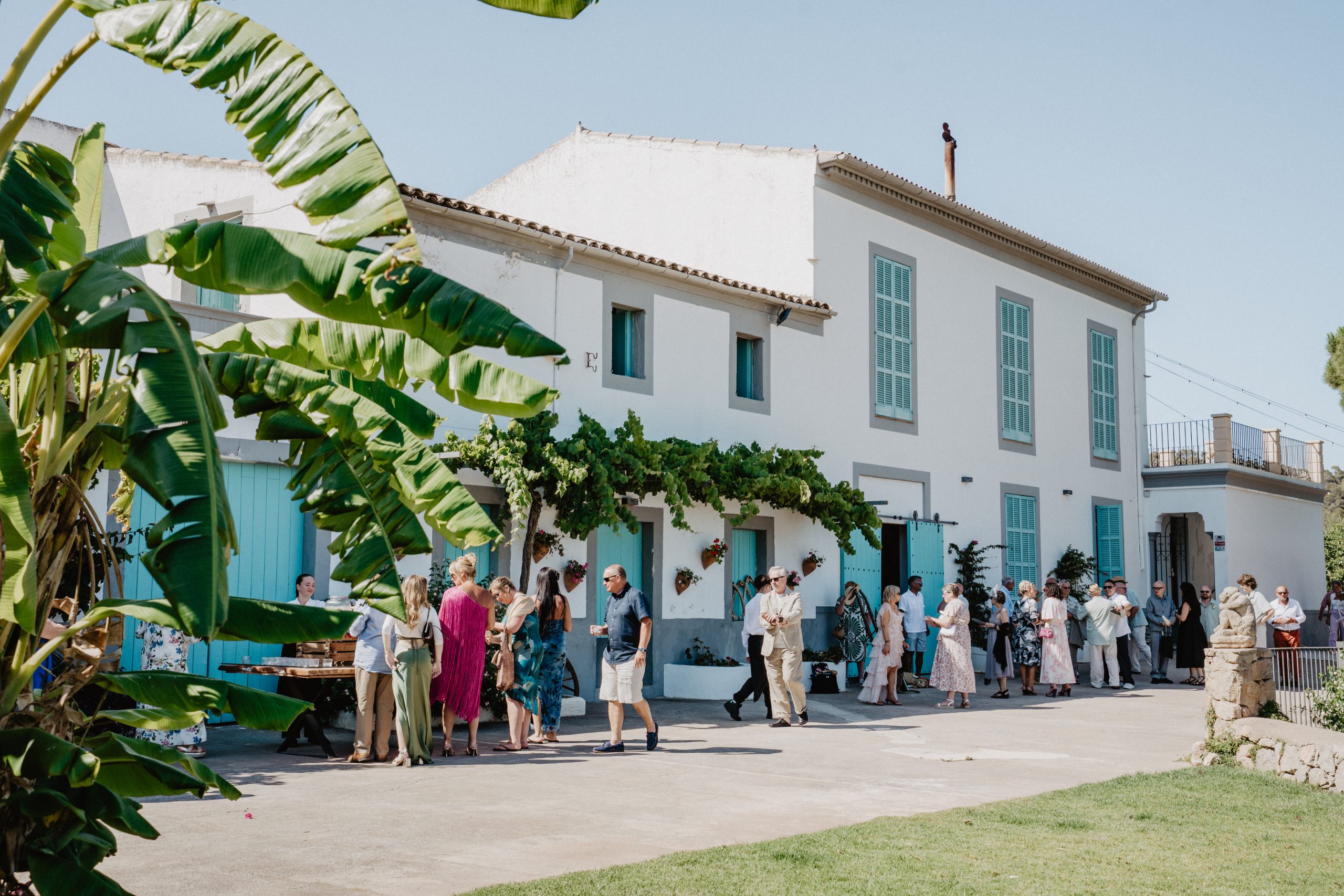
No fixed rule decides who pays for every part of a destination wedding in Mallorca. In most weddings we plan, guests pay for their own flights and accommodation. The couple hosts the wedding itself. Transport, a welcome dinner or a farewell brunch can then be hosted, shared or clearly optional. The key is to decide what you host, and tell guests before they book anything.
In this guide
- A simple way to decide who pays
- Flights
- Accommodation
- Transport
- Welcome dinner and farewell brunch
- Excursions and extra events
- Family contributions
- What to tell guests, and when
- The Dybiec Wedding perspective
- Frequently asked questions
A simple way to decide who pays
To begin with, sort every part of your wedding into three groups: the wedding you host, the extra events you invite guests to, and the guest’s own trip. Then decide who pays for each group. Define these lines yourself, so guests never discover costs one invoice at a time.
The wedding you host. This usually means the ceremony and reception, with the food, drinks and suppliers behind them.
Extra events. Welcome drinks, a pool gathering, a recovery brunch, a boat trip or a beach afternoon each need a separate decision. You can host the event, subsidise part of it, or suggest it as an optional activity guests pay for themselves.
The guest’s trip. This normally covers flights, extra holiday nights, private airport transfers, optional excursions and meals outside hosted events.

Who pays for what at a destination wedding: the cost table
The table below shows who pays for what at a destination wedding in most cases. However, it is a planning framework, not a set of etiquette laws. Two weddings with the same guest count can decide differently, and both can work well.
| Expense | Who may pay | What to agree | When guests should know |
| Flights | Usually guests. Couple or family may help selected guests | Whether any contribution is offered, and to whom | Before guests book flights |
| Accommodation | Usually guests. Some rooms may be subsidised | Hotel, nights, rates, booking method, cancellation terms | Before rooms are promoted |
| Rooms required by the venue | Depends on the agreement | Who uses them and who pays | Before signing the venue contract |
| Airport transfers | Guests, couple or a mix | Individual or organised around main arrivals | Before guests arrange transport |
| Wedding-day transport | Often the couple | Pick-up points, return times, areas covered | Before guests choose accommodation |
| Ceremony and reception | Couple and agreed family contributors | Full budget and any family contribution | Internally, before deposits |
| Welcome dinner or drinks | Couple if hosted, guests if optional | Who is invited and what is included | Before guests plan that evening |
| Farewell brunch | Couple, guests, or hotel breakfast | Hosted event or simple meeting point | In the weekend information |
| Boat trip or excursion | Couple, shared or guests | Official event or optional activity | Before confirmations or payment |
| Personal holiday spending | Guests | Clear information on what is not included | Before travel |
Do guests expect to pay to travel to Mallorca?
Yes, most guests understand that a destination wedding involves travel costs. That does not mean every guest can attend. It also does not mean you must remove every cost from their trip. Above all, early notice and clarity help most.
First, tell guests the wedding date and the area of Mallorca where they should stay. Say how many nights are useful and whether events take place around the wedding day. Explain whether wedding-day transport is provided. Then list the costs they should expect to cover themselves.
One couple we spoke with lives outside Europe, while most guests will travel from the UK. With around 80 guests, their questions quickly moved beyond the venue. How much of the budget should transport take? Will families spend a week together? Should there be a casual lunch before the wedding?
Those choices change the budget far more than the simple question of what the wedding costs. This is why we treat the guest journey as part of the plan from the start.
Should you pay for your guests’ flights to Mallorca?
You do not need to pay for flights. Most destination weddings work well when guests arrange their own travel. Exceptions are personal. You may want to help a parent, a grandparent, a close relative or someone travelling from much further away.
That help does not have to be offered to everyone. Handle individual support privately and be specific. If you plan to contribute €300 towards a parent’s journey, say so. A vague promise such as “we’ll help with the flights” invites misunderstanding.
Who pays for guest accommodation at a Mallorca wedding?
Guests can pay for their own accommodation. This is one of the most common structures. But accommodation also shapes the wedding itself, because where guests sleep decides how they reach the venue and return.
Imagine 70 guests for a rural finca wedding. Twenty stay in Palma. Fifteen choose a beach resort. Others book villas in three different villages because the prices suit them. Nobody has done anything wrong. Yet you now have several transport routes and a much larger transport budget.
In Mallorca, venue, accommodation and transport are one connected decision. Our guide to wedding guest accommodation in Mallorca explains this in more detail.

Organising accommodation is not the same as paying for it
You can research hotels, negotiate group conditions, recommend several price levels and coordinate transport from those hotels. You can do all of this without paying for a single room. Couples sometimes assume that arranging something means funding it. It does not.
When the venue requires rooms
Some Mallorca venues build accommodation into the booking. A couple may love a finca and then learn it requires several compulsory nights. The question changes from “do we like it?” to a practical set of questions. Who uses these rooms? How many nights are compulsory? Does the cost sit inside the wedding budget? Do guests reimburse any of it?
A small room requirement can actually help. Rooms can go to close family, older relatives or children who need to rest. But decide this before signing the contract, so the requirement does not quietly add thousands of euros.
Take care with venues that need every guest to stay at a fixed rate. Test the guest economics as well as your own. The rate must suit your group, and guests should know it from the beginning.
Should the couple pay for wedding-day transport?
No rule says you must, but this is where paying often improves the guest experience most. Many private fincas sit outside the main resort areas. Guests may be drinking. Rural taxi availability is not something we would build a departure plan around.
A 1 a.m. finish does not put everyone in their hotel at 1 a.m. Guests must be gathered, passenger lists checked and vehicles loaded. There may be several stops. Sometimes a large coach cannot reach the venue, so smaller vehicles are needed.
Many couples therefore include wedding-day transfers in their budget, even when guests pay for flights and hotels. The message is simple: stay within these areas and we will get you there and back safely.
Airport transfers are a separate decision
Getting guests from the airport to their hotel is a different task from getting them to the wedding. Arrivals at Palma de Mallorca Airport spread across several days and many flights. As a result, individual transfers for every arrival are expensive and rarely necessary.
Depending on your guests, you might share clear taxi information, recommend private transfers, or organise shared transfers for major arrival groups. Wedding-day transport needs far more control, because everyone must arrive at about the same time.
Welcome dinner and farewell brunch: hosted or optional?
Ask one question: is this part of the programme you expect guests to attend? If yes, treat it as part of your hospitality budget. If it is genuinely optional, individual payment is easy to communicate. What matters is that guests can tell which one you mean.
Compare two invitations. “Join us for our welcome dinner on Friday at 7 p.m.” reads as a hosted event. “We’ll be at this restaurant from 7 p.m. if you’d like to join us, and everyone orders individually” reads as a social suggestion. Neither is wrong. Confusion begins when guests cannot tell them apart.

For the farewell brunch, three models work well:
- The couple hosts it. This gives the weekend a clear ending.
- Breakfast is included in the hotel. Guests meet over breakfast without another venue, catering and transport cost.
- You suggest a meeting point. Guests order independently, which suits an intentionally informal atmosphere.
Do not label every gathering an official wedding event unless you want it to feel like one.
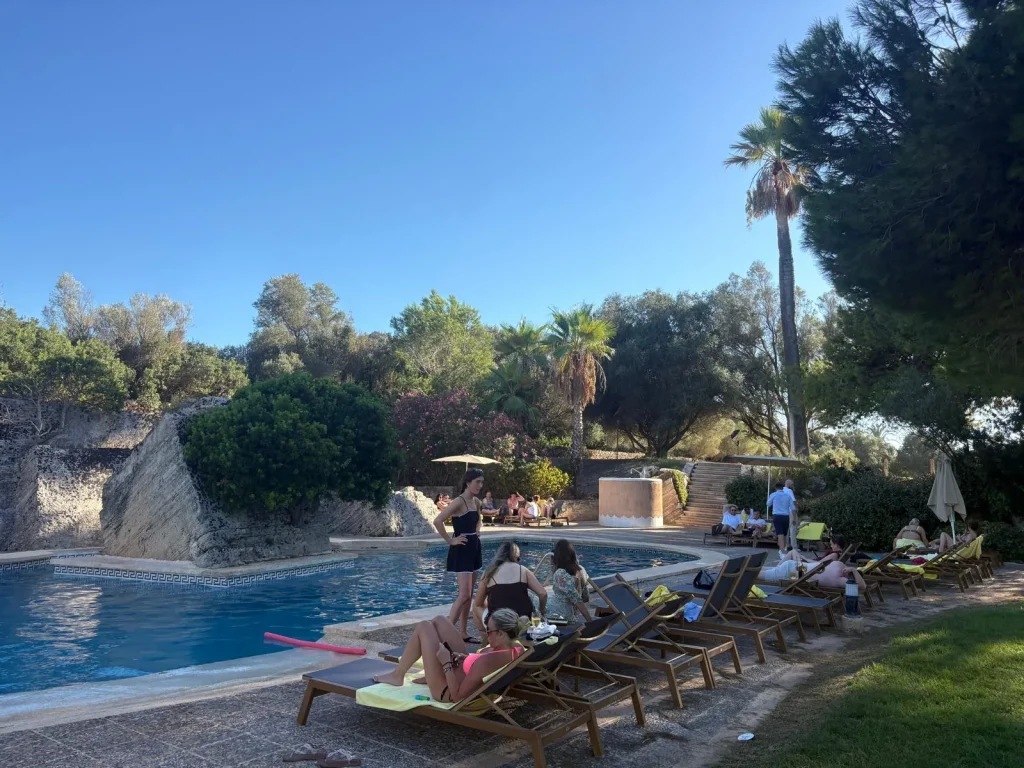
Pool parties, boat days and excursions
Mallorca makes extra experiences tempting. A boat, a catamaran, a beach club or a wine tasting can be wonderful. They can also turn a wedding budget into a holiday budget very quickly. Before adding an activity, ask four questions:
- How many guests is it really for? A boat for 18 close friends is very different from taking 80 guests to sea.
- Is attendance expected? If missing it would make a guest feel they missed part of the wedding, you are treating it as a wedding event.
- Is transport needed? The real cost includes getting everyone there and back.
- Does it improve the weekend? Some guests would rather have a quiet morning by the pool.
Not every guest needs to attend every event. One couple planned to invite about 70 people and expected 50 to 60 to attend. A boat afternoon was for the wedding party and close family, around 20 to 25 people. The welcome evening was for everyone. That structure changed their budget far more than the length of the weekend did.
A multi-day wedding does not mean hosting every guest for three full days. It gives the celebration room to breathe: arrival, celebration and a slower farewell. The wedding day remains the emotional foundation, and the other moments should support it. Our Signature Three-Day Mallorca Wedding Experience is built on this rhythm.
Family contributions: define the amount, not the tradition
Avoid old rules about which side pays for what. Modern weddings rarely fit them, especially when families live in different countries. Define the contribution instead.
For example, “Mum and Dad are contributing €10,000 to the wedding” is a useful planning statement. So is “Jason’s family would like to host the welcome dinner.” A phrase like “his parents are paying for dinner” raises questions. Which dinner? For how many people? Does it include drinks, venue hire, transport and tax? A clearly defined contribution prevents awkward conversations later.
What to tell guests, and when
Guests do not need every detail early. They do need every financial commitment early. The shape of the trip should be clear before anyone books.
With the save-the-date: the destination, the wedding date, the approximate area if known, and any events on surrounding days.
Before accommodation is booked: recommended towns or hotels, expected room costs, whether a room block exists, and whether guests pay the hotel directly. Say which areas your transport covers.
Before travel: pick-up points, return times, hosted events, optional events, and any payment deadlines.
Compare two messages. “We are getting married near Sóller. We recommend staying in Sóller or Port de Sóller. Guests arrange their own flights and accommodation. We will provide transport to and from the venue, and we will host welcome drinks on Friday.” That tells a guest what to expect. “Mallorca, June 2028. More details to follow” forces them to guess.
The biggest guest cost is not always the flight. For many people it is the combination of flights, bags, airport journeys, hotel, local transport, meals, childcare and time off work. One guest sees a long weekend in Mallorca. Another sees two adults, two children and four flights in school holidays.
You cannot solve every personal circumstance. But you can avoid making the trip harder. Give plenty of notice and recommend several accommodation levels. Provide wedding transport, keep extras genuinely optional and make your wedding website very clear.
A practical example: a 70-guest wedding weekend
This is one possible structure, not a rule.
| Day | What happens | Who pays |
| Friday | Boat afternoon for 20 close family and wedding party | Hosted by the couple, or agreed privately with family |
| Friday | Welcome drinks and informal dinner for all guests | Couple, if hosted |
| Saturday | Ceremony, aperitif, dinner, party and return transport | Couple |
| Sunday | Relaxed brunch | Couple, hotel breakfast, or self-paid gathering |
In this version, guests pay for flights, accommodation, airport transfers, personal spending and optional activities. We did not use etiquette to decide this. We used who is invited, whether attendance is expected, the couple’s priorities, the budget and the guest experience.
The Dybiec Wedding perspective: budget decisions are guest decisions
At a destination wedding, a decision about who pays for a coach looks financial. It also decides whether 70 guests leave a rural finca easily at the end of the night. A decision about accommodation looks personal. It also decides whether your wedding morning begins calmly, or with messages from guests scattered across the island asking how to get there.
This is why we do not separate budget from guest experience. Venue changes the accommodation plan. Accommodation changes transport. Transport changes the guest experience. Every hosted event changes the budget. Magdalena, as a local wedding planner and celebrant, looks at these decisions together, before they become contracts.
Reviews rarely praise a bus. Couples describe what good logistics allowed them to do. One couple wrote that they and their families could fully enjoy the wedding without worrying about logistics. Another remembered a whole week of fun and laughter with friends and family. Nobody comes to Mallorca to remember a transport plan, but a good transport plan is often why they remember the celebration. You can read more couples’ experiences in our Dybiec Wedding reviews.
Before confirming your budget, write down every event you are considering. Next to each, note who is invited, whether it is expected or optional, who organises it, who pays and whether it needs transport. Then add the guest travel questions: where should they stay, who books, who pays the hotel and how do they reach the wedding? To see the wedding-day costs themselves, try our Mallorca wedding budget calculator.
Frequently asked questions
Who traditionally pays for a destination wedding?
Who pays for what at a destination wedding depends less on tradition than on clarity. Most couples host the wedding and guests cover travel and accommodation. Families may contribute, but define each contribution by amount or event, not by side.
Do you have to pay for guests’ accommodation at a destination wedding?
No. Guests can pay for their own rooms. You can still research hotels, negotiate group conditions and organise allocation without paying. Check whether your venue requires rooms, because that changes your own budget.
Should the couple pay for wedding-day transport in Mallorca?
It is not obligatory, but many couples choose to. Many fincas are outside resort areas, and late-night taxis are unreliable. Hosted transport gets guests there and back safely.
Do you need to host a welcome dinner and farewell brunch?
No. Both can be hosted, shared or optional. Tell guests clearly which it is. A simple meeting point or hotel breakfast can give a similar sense of connection.
Should destination wedding guests still give a gift?
That is a personal choice. Guests already commit time and money to travel. Avoid planning around gifts or using them to offset costs.
Is a three-day wedding more expensive for the couple?
It can be, but it does not need to mean hosting everyone for three days. You can host only the moments that matter and keep the rest optional.
Should bridesmaids and groomsmen pay their own way?
They can, but explain the full commitment before they agree. Travel, clothing, extra nights and pre-wedding events add up. You can decide privately whether to help.
Before you commit to the venue
Your guests will feel your decisions more than your spreadsheets. Clear promises about what you host, and what is optional, make the weekend easier for everyone.
If you are still deciding what your Mallorca wedding should include, begin a private conversation with Magdalena before you commit to a venue. Send your guest count, budget range and accommodation ideas. She will help you see what is worth hosting, what can stay optional and where your budget matters most.

