

Wedding guest accommodation in Mallorca works best when it is decided as part of the venue and transport plan, not afterwards. For most international couples, the right answer is a small cluster of options — one main base near the venue, with a nearby alternative for different budgets — connected by pre-arranged transfers. Deciding this early is what keeps guests comfortable and keeps the day flowing.
That single decision quietly shapes more of your wedding than almost anything else. Where your guests sleep determines how they arrive, how relaxed they feel, how late they can stay, and whether the celebration feels connected or scattered across the island.
Most couples plan it in the wrong order. They fall in love with a venue, sign, and only then discover that the nearest suitable hotel is forty minutes away down a mountain road, or that the beautiful finca sleeps twelve when they are bringing seventy.
This guide walks through the decision the way it should be made from abroad: calmly, in the right sequence, with someone who knows what the map does not show.
Why guest accommodation is a decision, not a booking
Booking rooms is easy. Deciding where and how your guests stay is the harder, more important question — and it belongs early in the planning, alongside the venue.
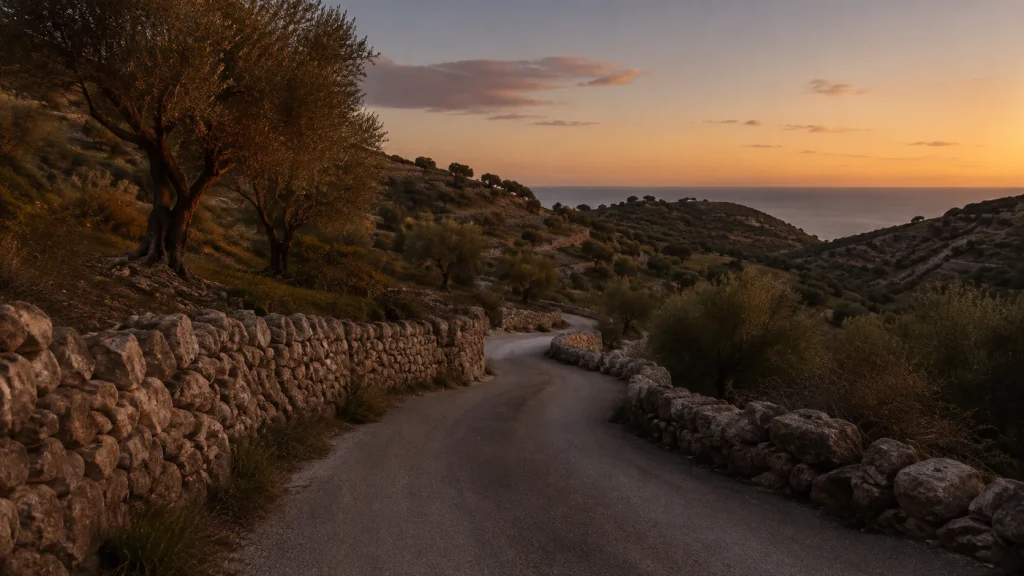
In Mallorca, distances are deceptive. A venue that looks fifteen minutes from a town on a map can be a slow, winding half-hour in reality, especially at night when guests are tired and the roads are dark. On-the-ground knowledge of these journeys is one of the quiet advantages of planning with someone based on the island rather than choosing from photographs.
The accommodation decision touches almost every other part of the day. It affects your transport budget, how long the party can run, whether older relatives and small children are comfortable, and whether guests feel looked after or left to fend for themselves in an unfamiliar place. This is why, at Dybiec Wedding, accommodation is treated as part of the base strategy — the connected system of venue, lodging, transport and flow that has to work together — rather than a task to tick off once the venue is booked.
Get this right and everything downstream becomes calmer. Get it wrong and you spend the months before your wedding solving logistics problems that a good early decision would have prevented.
The first question: on-site, one base, or spread across the island?
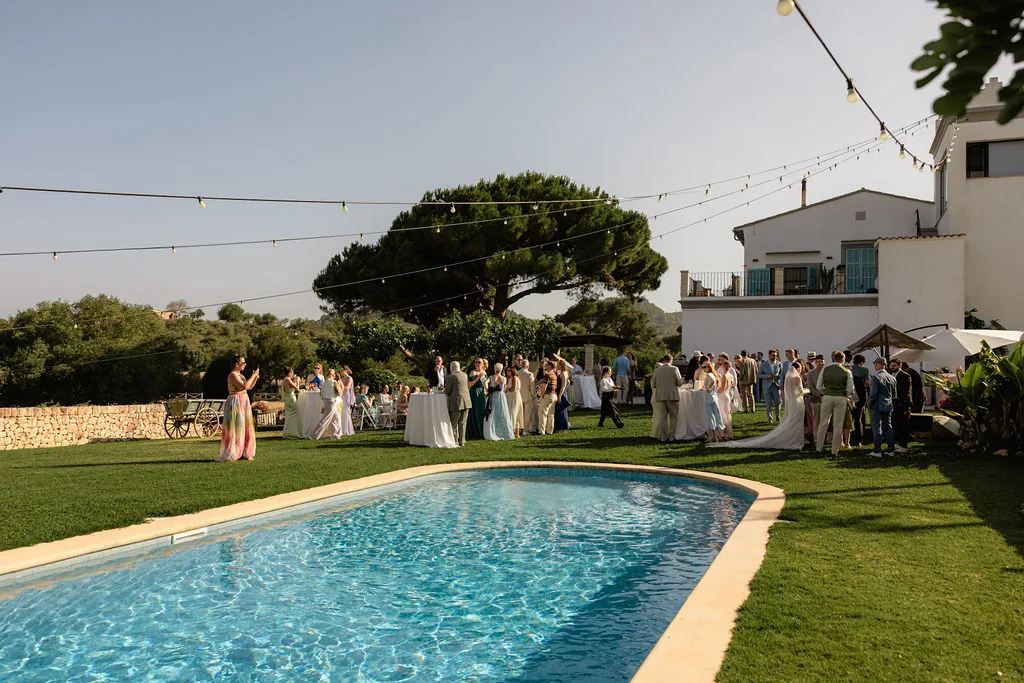
There are three realistic models for where your guests stay. The right one depends on your guest count, your budget and how connected you want the celebration to feel.
Everyone on-site. Some fincas and estates offer accommodation for the whole party — often up to sixteen guests, occasionally more with additional cottages. This is the most intimate option, ideal for tiny weddings where the couple wants the celebration to feel like one continuous gathering under a single roof. The limit is capacity: on-site lodging rarely stretches beyond the closest circle.
One shared base. For most international weddings, a single hotel or a small group of villas near the venue becomes the natural home for the celebration. Guests see familiar faces at breakfast, share transfers, and the wedding feels like a collective experience rather than a scattered one. This is usually the calmest model for groups of thirty to a hundred.
Spread across the island. Some couples let guests choose their own accommodation across different towns. It offers freedom and suits a wide range of budgets, but it makes transport more complex and the celebration less connected. It can work — but only with a clear transfer plan holding it together.
| Model | Best for | Main advantage | Main challenge |
| Everyone on-site | Very small weddings, closest circle | Complete intimacy, no transfers | Limited capacity |
| One shared base | 30–100 international guests | Connected feeling, simple transport | Requires early booking of a block |
| Spread across island | Budget-diverse guest lists | Freedom and flexibility | Complex logistics, less cohesion |
There is no single correct answer here — only the right answer for your guests, your numbers, and the feeling you want the days to have. This is undoubtedly the kind of decision where talking it through with someone who knows the island saves you from an expensive assumption.
How close is close enough?

Guests should be close enough that the journey home is short and safe, and close enough that the day feels shared. As a general principle, a main base within about twenty to thirty minutes of the venue works well for most celebrations — but the number matters less than the nature of the road.
A twenty-minute transfer along a clear route is very different from a twenty-minute drive down a narrow mountain pass. What guests actually experience is the journey, not the distance on the map. This is where local knowledge matters more than any search result: knowing which roads are comfortable after dark, where transfers realistically take longer than expected, and which pairings of venue and hotel genuinely work.
Proximity also protects the celebration itself. When guests are staying nearby, the evening can breathe. No one is watching the clock because of a long drive back. The party can carry on, and the transition from dinner to dancing to a slow farewell happens naturally — one of the reasons the flow of a Mallorca wedding day feels so unhurried when the accommodation has been chosen with care. You can read more about how that flow is designed in our guide to guest experience design.
Who pays — and how to communicate it clearly
Couples usually cover the wedding, and guests usually cover their own accommodation and travel — but what matters most is that the arrangement is communicated early and without ambiguity.
International guests are committing real money and time to be with you. Clarity is a form of hospitality. When people know what to expect — roughly what a room will cost, which nights are recommended, how transfers work — they can plan calmly and say yes with confidence.
A practical approach is to secure a small block of rooms at a chosen base and share the details with guests well in advance, alongside one clear alternative at a different price point. This gives people structure without removing choice. It also lets you build accurate numbers into your planning, which connects directly to your overall budget — something we cover in detail in the Mallorca wedding budget guide.
What you want to avoid is silence. Guests left to research an unfamiliar island alone often book too far away, miss the recommended nights, or arrive stressed. A little structure early removes all of that.
Transport: the piece couples forget until it is too late

Accommodation and transport are two halves of one decision. Where guests sleep determines how they get to the venue, and a beautiful base with no transfer plan quickly becomes a logistical problem.
Pre-arranged transfers between the guest base and the venue solve several things at once. Guests do not need to hire cars for the wedding itself. No one has to worry about driving after a glass of cava. Everyone arrives together, on time, in the right mood — and everyone gets home safely at the end of the night. This single arrangement removes a large share of the anxiety that guests silently carry at destination weddings.
For international guests especially, this is where careful coordination is felt most. Many are already navigating flights, an unfamiliar airport and a foreign language. Being met with a clear, pre-planned journey from hotel to celebration and back is the moment they realise the day has been genuinely thought through on their behalf.
What this looks like when it is handled well

When accommodation, transport, and venue are planned as one system, guests rarely notice the logistics at all — and that invisibility is the point. The comfort is felt; the coordination behind it stays quietly in the background.
This is something couples consistently reflect on afterwards. One couple with both German and English-speaking guests described how much it mattered that Magdalena could move between both languages, so their guests always felt comfortable approaching her throughout the day. Another spoke about how their whole party was cared for from the planning stages right through the celebration, to the point that many guests told them it was the best wedding they had ever attended. What connects these reflections is not a single detail — it is the sense that everyone was held, so the couple and their families could simply be present.
That is the real aim of getting accommodation right. Not perfect logistics for their own sake, but the freedom for you to stop managing and start experiencing your own wedding.
You can see how this thinking runs through the entire planning process across The Mallorca Edit series on YouTube, where Magdalena walks through the decisions that shape a destination wedding on the island.
The Dybiec Wedding perspective: accommodation as part of the base strategy

At Dybiec Wedding, accommodation is never treated in isolation. It sits inside what we call the base strategy — the foundation of venue, lodging, transport, guest flow and budget structure that every other decision rests on.
This is the difference between planning a wedding and designing an experience. A venue chosen without thinking about where guests will sleep is only half a decision. A hotel booked without a transfer plan is a problem waiting to appear. When these pieces are considered together from the beginning, the whole celebration becomes calmer, more predictable and more genuinely enjoyable — for you and for everyone who travelled to be there.
Because Magdalena plans from the island itself, she knows which venue-and-accommodation pairings actually work, which journeys are comfortable and which only look close on a map. That local knowledge, applied early, is what turns a scattered set of bookings into a coherent, well-held experience. It is also why the accommodation decision is one of the first decisions worth getting right, long before the details.
Frequently asked questions
Where do most wedding guests stay for a Mallorca wedding? Most international guests stay at a shared base near the venue — either a hotel with a reserved block of rooms or a small group of villas. This keeps the celebration connected, simplifies transport, and means guests see familiar faces throughout the wedding rather than being spread across the island.
How far from the venue should guest accommodation be? As a guide, a main base within twenty to thirty minutes of the venue works well. What matters more than distance is the nature of the journey — a clear route feels very different from a winding mountain road at night. Local knowledge of the actual roads is more useful here than map estimates.
Do couples pay for their guests’ accommodation in Mallorca? Usually, guests cover their own accommodation and travel, while the couple covers the wedding itself. The most important thing is communicating the arrangement clearly and early, including recommended nights and rough costs, so guests can plan with confidence and book the right rooms in good time.
Should we book a whole finca or use a hotel for guests? It depends on numbers. On-site finca accommodation suits tiny weddings and the closest circle, often up to around sixteen guests. For larger international groups of thirty to a hundred, a nearby hotel base with a room block is usually more comfortable and more flexible.
How do guests get from their hotel to the wedding venue? The calmest option is pre-arranged group transfers between the guest base and the venue. This means no one needs a hire car for the wedding, no one worries about driving after drinking, and everyone arrives and leaves together — which also protects how late the celebration can comfortably run.
When should we decide on guest accommodation? Early — ideally alongside choosing the venue, not after. Because accommodation, transport, and venue form one connected system, deciding them together prevents the most common and expensive logistical problems, and gives international guests enough notice to plan their trip calmly.
A calmer way to decide

Where your guests stay is one of the first decisions that shapes your entire Mallorca wedding — and one of the easiest to get wrong from a distance. Before committing to a venue, it is worth understanding how accommodation, transport, and guest comfort fit together for your specific group.
Begin a private conversation with Magdalena to understand what accommodation and venue direction would genuinely work for your guests, your budget, and the days you want to create. Or download The Mallorca Wedding Guide to understand the first decisions couples most often underestimate.
