


A non-traditional wedding in Mallorca is not a wedding without traditions. It is a wedding where every tradition earns its place. Couples keep the rituals that hold real meaning for them, set aside the ones that feel performed, and replace a few with something more personal. The result is a day that belongs to the couple — not to a script.
This guide walks you through a simple, calm way of making those choices: a Tradition Audit. It is written for international couples, particularly from the UK and the US, planning a destination wedding on the island — and it treats every decision as a matter of meaning, not fashion.
In this guide
- Why more couples are questioning the wedding script
- The Tradition Audit: a calm framework for deciding what stays
- The traditions worth keeping
- What you can set aside — without losing elegance
- Considered alternatives: personal touches that mean something
- Why Mallorca suits an intentional wedding
- The value of one person guiding the day
- FAQ
Why more couples are quietly rewriting the wedding script

For a long time, weddings were assembled from a fixed set of parts. The bouquet toss. The garter. The formal procession. The staged first dance. Each was included simply because it was expected.
That is changing. More couples now begin planning with a different question — not “what does a wedding include?” but “what do we actually want our guests to feel?” The shift is towards personal meaning and guest comfort rather than performance for an audience.
This is not rebellion for its own sake. It is a move towards intention. A smaller, considered guest circle. A ceremony that reflects a specific relationship. A day designed so the couple can be fully present, rather than managing a sequence of set pieces. When luxury is measured in presence rather than spectacle, the questions you ask about tradition naturally change.
The Tradition Audit: a calm framework for deciding what stays
The Tradition Audit is a simple way to review inherited customs one by one. Rather than keeping a ritual out of habit — or discarding it to seem modern — you hold each one up to three quiet questions.
A tradition worth keeping usually sits where all three meet:
- Meaning. Does this hold genuine meaning for us, or are we including it because it is expected?
- Connection. Does it bring our guests closer, or does it ask them to watch a performance?
- Intention. Is this an active choice we are making, rather than a default we never examined?
When a tradition answers yes to all three, keep it. When it does not, you are free to reshape it or let it go. The point of the audit is not to strip a wedding down. It is to make sure everything that remains is there on purpose.
The traditions worth keeping
Some rituals endure because they ground everyone at the moment. They are quiet, and they carry weight.
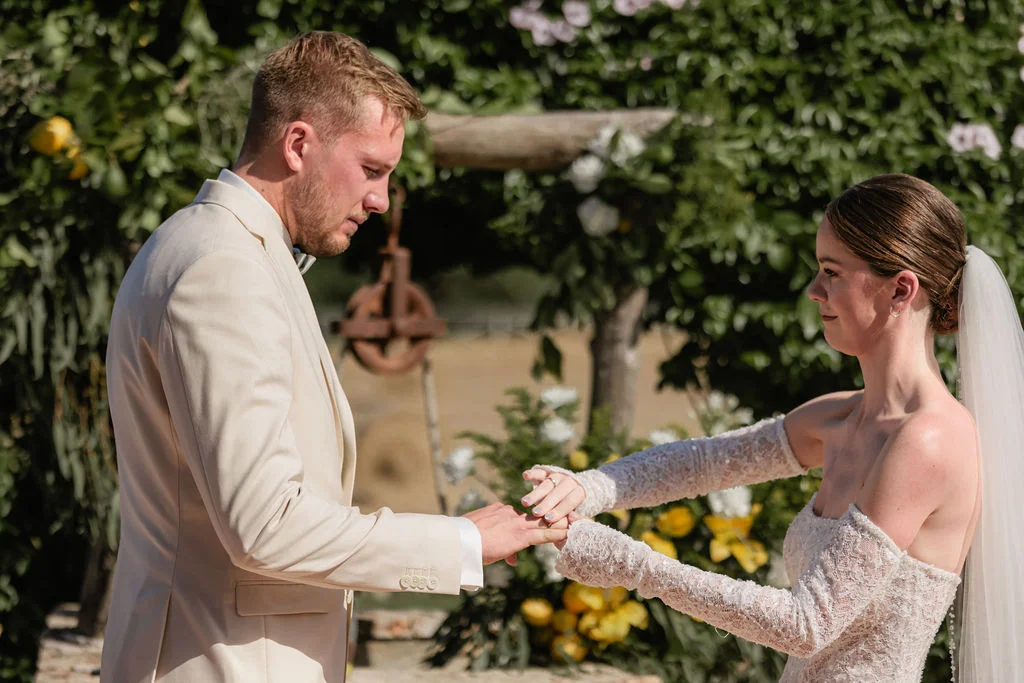
Personal vows tend to be the clearest example. Words written for one specific person, spoken aloud, hold more than any inherited formula. The exchange of rings remains a simple, resonant promise — understood in every culture, needing no explanation. And a first dance, when it is treated as a private moment shared in front of loved ones rather than a staged routine, can be one of the most honest parts of the day.
What these have in common is presence. They are not performed at guests; they are experienced with them. That is usually the mark of a tradition worth keeping.
What you can set aside — without losing elegance
Other customs can be released without a second thought, particularly when they no longer reflect who you are.
The bouquet toss and the garter toss both trace back to older ideas that many couples no longer wish to stage — and they can leave guests feeling either singled out or uncomfortable. Rigid, gender-based structures in the wedding party can quietly exclude the mixed-gender friendships that define most modern lives. And any part of the ceremony that exists only because convention demands it deserves a closer look.
Setting these aside is not a loss of tradition. It is the freedom to release what no longer resonates, so the day feels like yours. The audit simply gives you permission to ask why before you include something — and elegance rarely suffers when the answer is considered.
Considered alternatives: personal touches that mean something

The most memorable modern touches are not passing trends. They are expressions of intention. A few directions couples are drawn to:
- A shared bouquet, rather than a toss. An arrangement designed to separate into smaller bundles, so its beauty is shared among several people you love — or single stems handed out with a few handwritten words.
- Roles chosen by history, not gender. A person of honour or friend of honour who has genuinely walked beside you, whatever their gender.
- Walking in together. Entering as a partnership, rather than being handed from one person to another — a small change that quietly reflects an equal relationship.
- An anniversary dance. Inviting the longest-married couples in the room to the floor honours enduring love and draws your guests into the moment, rather than asking them to watch.
- Letters instead of a set-piece unity ritual. Sealed notes to each other, opened on a future anniversary — a private promise with a long life.
On the question of conscious, ethical choices — such as the origin of a ring, or living decor like potted olive trees that are planted after the day — the useful advice is not a brand name. It is what to look for: an audited supply chain, independent certification, and clear traceability for any stone. Chosen for the right reasons, these details say something true about the couple, without turning into spectacle.
Why Mallorca suits an intentional wedding

Mallorca is an unusually natural home for this way of thinking. For international couples, the island offers the freedom of a symbolic ceremony — one that can be shaped entirely around your story, rather than a fixed liturgy. That freedom is the whole premise of the Tradition Audit, made real.
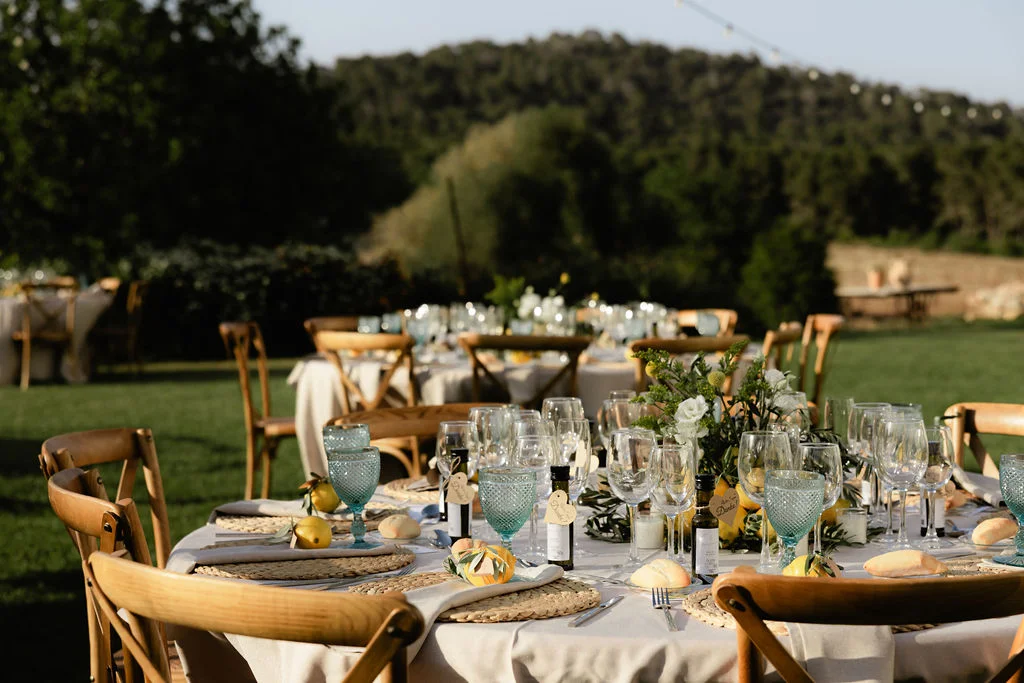
The Mediterranean setting does much of the work on its own. The light is soft and generous; the landscape of stone, olive, and sea needs very little dressing. A less formal, more personal ritual sits comfortably here in a way it might not under a rigid convention elsewhere.
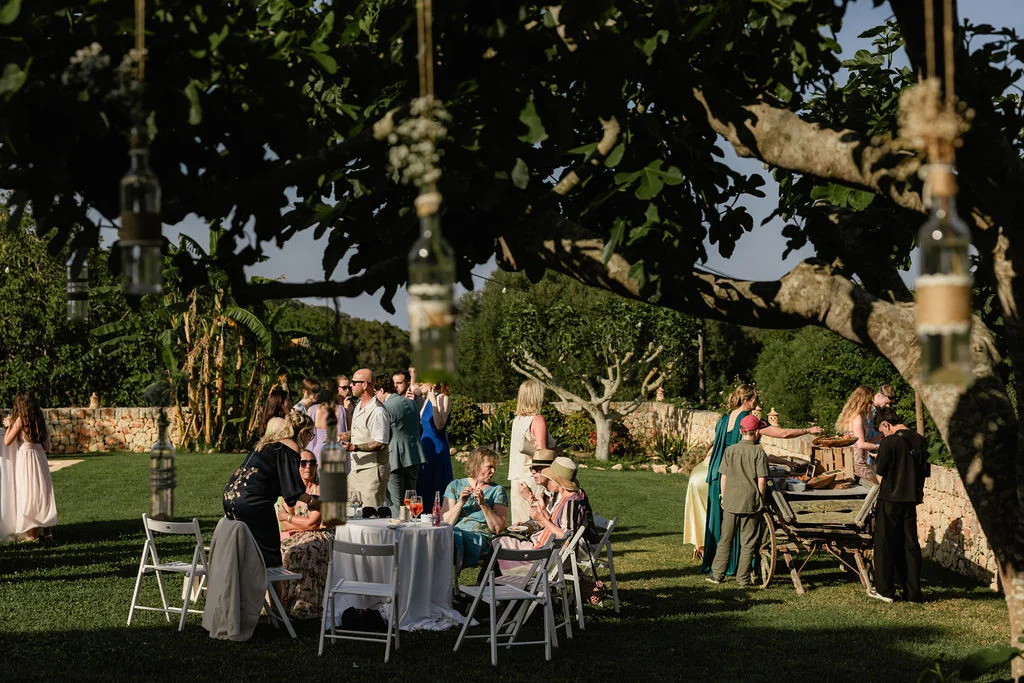
There is also the matter of your guests, who are travelling to be with you. A considered, intimate guest circle — and a thoughtful approach to their experience across the celebration — tends to matter more here than any single set piece. Distance rewards intention.
If you are weighing up how far to move from tradition, it can help to talk it through before you commit to anything. You can begin a private conversation with Magdalena about what would feel right for your day.
The value of one person guiding the day
An audit of tradition is easier to carry out when someone who knows your story is beside you. This is where a family-led approach matters in practice, not sentiment: planning, ceremony, flowers, music, and logistics stay connected from the beginning, so the choices you make in the audit are carried through the whole day rather than lost between separate suppliers.
There is a particular advantage when the person who guides your planning can also lead the ceremony. Because Magdalena comes to know a couple’s story during planning — and can then lead the symbolic ceremony herself — the emotional centre of the day feels connected to everything around it, rather than added as a separate piece at the end. Every tradition you keep, and every one you let go, is carried with a single, clear intention.
That is what allows a couple to step into the day and simply experience it: a calm mind, an authentic connection, a celebration built from what is true for them.
Frequently asked questions
Do we have to include a bouquet toss or garter toss? No. Both are entirely optional, and many couples now leave them out or replace them with something more personal — such as a bouquet designed to be shared, or single stems handed to specific guests. The right choice is simply the one that reflects you.
Is it acceptable to skip a religious ceremony? Yes. Many international couples choose a symbolic ceremony instead, shaped around their own story and led by someone who knows them. On Mallorca, this is a well-established path for couples marrying away from home.
Can we walk down the aisle together instead of being given away? Absolutely. Walking in as a partnership — or being accompanied by a person of honour chosen for their place in your life — is an increasingly common way to reflect an equal relationship.
Will a non-traditional wedding still feel elegant? Elegance comes from intention, not from following a fixed template. A wedding where each element is chosen purposely tends to feel more refined, not less because nothing is included accidentally.
How do we decide what to keep and what to change? The Tradition Audit is a helpful starting point: for each custom, ask whether it holds meaning for you, whether it brings your guests closer, and whether it is a genuine choice. Speaking with a planner who can also guide the ceremony makes those decisions easier to carry through the day.
Does a non-traditional wedding cost more? Not inherently. Cost is shaped by guest numbers, format and choices, not by how traditional the day is. You can explore realistic figures in the Mallorca wedding budget guide.
A calmer way to begin
A non-traditional wedding is not about breaking rules. It is about choosing, with care, which parts of the day are truly yours.
Before committing to a venue or a format, begin a private conversation with Magdalena to understand what kind of Mallorca wedding direction would genuinely work for your guests, your budget, and your vision. Or download The Mallorca Wedding Guide to see the first decisions couples often underestimate.

