
Why Mallorca Wedding Guest Experience Design Matters More Than Decorations
Most couples begin planning a wedding in Mallorca with venues, flowers, colour palettes and tablescapes. That is natural. These are the decisions that feel most visible and most urgent from a distance. Few think yet about Mallorca wedding guest experience design.
But there is a quieter problem sitting underneath all of it: the fear of losing control of the day itself. Too many decisions, too many suppliers, too much uncertainty about whether it will all come together. Underneath that sits another worry. The people you love most might spend the day managing logistics, instead of simply being there with you.
Guest Experience Design is the answer to that problem. It is the intentional structuring of every stage of the guest journey. That journey runs from the moment someone books a flight to the moment they fly home. The result: a celebration that feels calm, connected and effortless to move through, whatever shape the wedding takes.
The real problem behind Mallorca wedding guest experience design
Ask any couple who has planned a wedding from abroad what they remember most about the process. It is rarely the flowers. It is the decision fatigue. The sense that every choice — venue, timing, transport, seating, music — sits in isolation, with no one holding the whole picture.
That chaos is what guests feel too, even if they can’t name it. A wedding without structure asks guests to work things out as they go. They’re left guessing where to be, when to arrive, how to get back to the villa. A wedding with structure disappears into the background. The only thing anyone has to do is show up and feel something.
This is the difference between organising a wedding and designing an experience — and it is the starting point for how Magdalena and the Dybiec Wedding team approach every celebration in Mallorca.
The architecture of predictability

Many people assume luxury means extravagance. In practice, true luxury is predictability.
It is knowing that every detail has been considered before you even think of it. Moving through a celebration without confusion or hesitation feels like freedom. That freedom comes from someone else having already anticipated what you need.
A wedding should never feel like a sequence of disconnected events — it should feel like a structure. Every transition has a purpose. Every guest instinctively knows where to be, without ever feeling managed. When that structure is invisible, guests relax, and the day becomes calm precisely because the planning behind it was not.
This is what allows a couple to become guests at their own wedding, rather than the people quietly running it.
Three things every well-designed wedding gets right
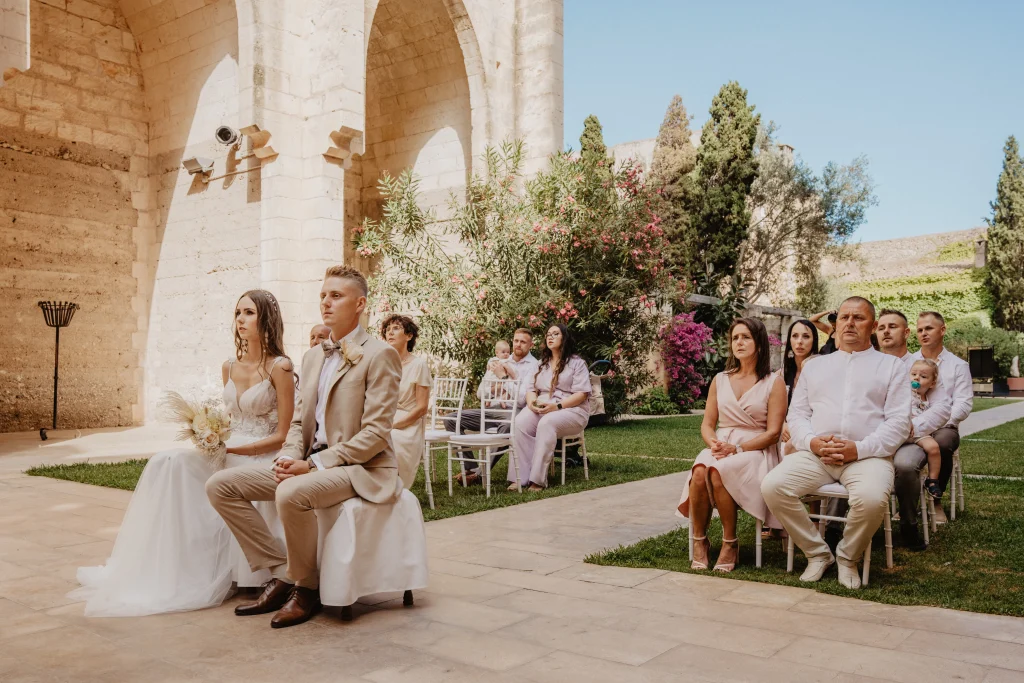
Whatever the format — one day or several — a wedding that guests remember years later tends to share three qualities.
A sense of personal story. Guests should discover details throughout the day that reveal something true about the couple — not only through speeches, but through the choices made in location, music and small gestures.
Sensory richness. Luxury is experienced through the senses: the sound of a venue, the taste of local food, the scent carried on a Mediterranean breeze, the texture of linen under candlelight. These details are what the memory holds onto long after the specifics fade.
Genuine connection. The strongest weddings help guests connect with each other, not only with the couple. That is what turns a beautiful evening into a shared memory a family keeps returning to.
One day, two days, three days — different rhythms, same foundation
The wedding day is the emotional foundation of every Dybiec Wedding celebration, whatever its length. A one-day wedding is not a smaller version of a longer one. Nor is a three-day wedding a “bigger” or more serious wedding. Both are simply a different rhythm for the same goal: a day your guests can be fully present for.
Some couples want everything held within a single, beautifully structured day. Think ceremony, dinner, and celebration as one continuous arc with no dead time. Others want to give their guests room to arrive slowly, connect before the ceremony, and say goodbye without rushing. Both are complete, considered ways to design a Mallorca wedding. Neither is the “real” version and neither is the upgrade.
What changes between formats is not the level of care — it is how much room there is for each phase of the guest journey to breathe.
Mallorca wedding guest experience: arrival, celebration and farewell
Arrival. Whether guests land the morning of the wedding or two days earlier, the goal is restoration, not itinerary. In a single day, this might mean a relaxed welcome drink before the ceremony. Across a longer weekend, it might extend further — think a private dinner, a boat afternoon, or an informal gathering the evening before. Either way, the aim is the same: guests should arrive feeling cared for, not rushed.
The celebration itself. This is where structure matters most, whatever the timeframe. Magdalena builds the rhythm of the day around genuine presence. She protects quiet moments like a private First Look, while keeping the ceremony entrance precise. That moment is the anchor everything else moves around. Keeping the ceremony and reception close together matters as much in a one-day celebration as across a longer one. It stops guests being pulled out of the emotional thread of the day.
The ending. Most weddings plan carefully for the beginning and let the end take care of itself. A well-designed wedding does the opposite. In a one-day format, that might be a slower final hour rather than an abrupt finish. Across a wedding weekend, it might be a relaxed brunch the following morning — stories exchanged, no timeline, no performance. Either way, guests should leave feeling fulfilled, not simply finished.
You may still be weighing up which structure fits you. Think about your guests, your budget, and the feeling you want the day to have. Both the intimate, one-day wedding format and the three-day format sit at the same level in how we approach them. The right one depends on your circumstances, not on which is “more”.
Why scent matters more than photographs
One of the most overlooked elements of wedding design is scent. Smell is tied more directly to emotional memory than almost any other sense — a photograph captures a moment, but a scent can transport a guest straight back into it.
At Dybiec Wedding, this can mean subtle notes of Mediterranean citrus, wild herbs, fig trees, olive groves or sea breeze, woven into welcome gifts, guest suites and event spaces. Years later, the scent of orange blossom might be enough to carry a guest straight back to a cliffside ceremony over the Mediterranean. That is not decoration. It is quiet, deliberate design.
Why a family-led team changes how a wedding actually runs
Dybiec Wedding is a family-led studio: Magdalena leads planning and ceremony, Urszula leads flowers and decoration, Jimy leads music, and Krzysztof manages the technical and logistical side. That structure is not a sentimental detail — it is an operational one.
When planning, ceremony, flowers, music, and logistics stay connected from the beginning. Suppliers then have less room to work in isolation from each other. There’s less risk, too, of the small handovers — timing, styling, sound levels, guest flow — falling through the gaps between separate businesses. That connectedness is part of what allows the invisible structure behind a wedding to actually hold.
Planning from the UK or the US
Couples travelling from further afield tend to carry a version of the same worry: will someone actually be there on the ground, holding this together, or are we managing it all from a distance?
For couples in the United States, that worry often centres on the sheer distance and the time difference. They’re planning a wedding from 5,000 miles away. They can’t always tell whether a venue that photographs beautifully will actually work for sixty guests, transport and timing. For couples in the UK, the concern is usually less about distance and more about execution. They want Mediterranean warmth and the freedom of a symbolic ceremony, without losing UK-level precision.
Guest Experience Design addresses both. It is, in effect, local representation for people planning from a distance — someone who already knows how Mallorca actually works, translating that knowledge into a day that feels calm rather than improvised.
When logistics disappear, the day feels effortless
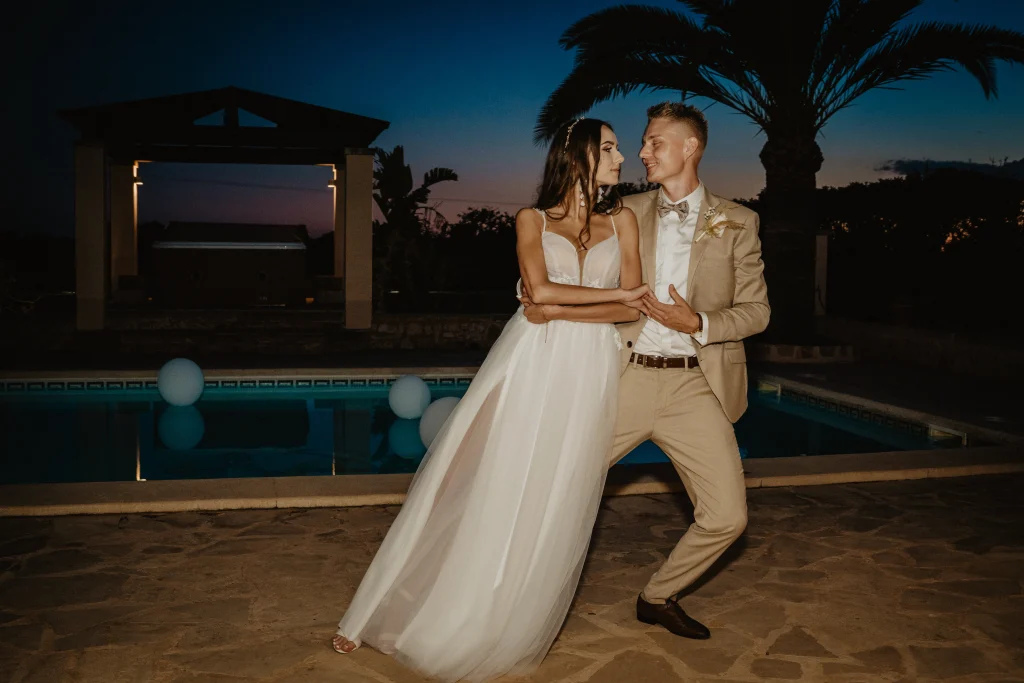
The best compliment a wedding receives is not “everything was organised.” It is “everything felt effortless” — because effortless is never accidental. Behind it sits a structure guests never see: a considered guest journey, careful logistics, deliberate timing.
When that structure holds, something specific happens. The couple stops managing. The guests stop working things out. Everyone is simply there. That is the actual purpose of Guest Experience Design — not to make a wedding look beautiful, but to make it something guests carry with them.
If you would like to see how this thinking applies to a longer celebration, we have written separately about extending the wedding day into a guest honeymoon — a relaxed continuation of the celebration for the days that follow.
Begin with a conversation about direction
Before committing to a venue or a format, think about what your own Mallorca wedding guest experience should feel like. Consider your group’s travel and their comfort. Then choose the rhythm that suits the wedding you actually want, not the one that photographs best.
Begin a private conversation with Magdalena to talk through what would work for your guests, your budget and your vision. Or download The Mallorca Wedding Guide to understand the first decisions couples often underestimate.
Frequently Asked Questions
1. What is Mallorca wedding guest experience design? It is the intentional planning of every stage of the guest journey, from arrival to departure. The result: a wedding that feels seamless, comfortable and emotionally memorable. This holds true regardless of how many days it spans.
2. Why are more couples choosing a multi-day wedding experience in Mallorca? A longer format gives guests room to arrive slowly, connect before the ceremony, and say goodbye without rushing. It is a different rhythm, not a bigger or more serious version of a one-day wedding.
3. Does Guest Experience Design only apply to larger, longer weddings? No. A one-day, intimate wedding benefits just as much from intentional guest experience design — often creating an even more concentrated emotional arc.
4. How does Magdalena design guest experiences? By combining local Mallorca knowledge, hospitality principles and personal planning to structure the guest journey around presence rather than logistics, whatever the format.
5. What makes Mallorca well suited to guest-focused weddings? Strong international accessibility, a genuine range of venue types, and real opportunities to design meaningful arrival and departure moments around the ceremony itself.
6. How important are guest logistics for a destination wedding? It is central. Transfers, accommodation, and the transitions between moments in the day directly shape how calm — or how chaotic — the celebration feels to guests.
7. Is a one-day wedding as memorable as a longer celebration? Yes. A one-day wedding can be just as unforgettable as a multi-day one when the guest journey is designed with the same intention — the difference is how much room each phase has to breathe, not how meaningful the day is.
