

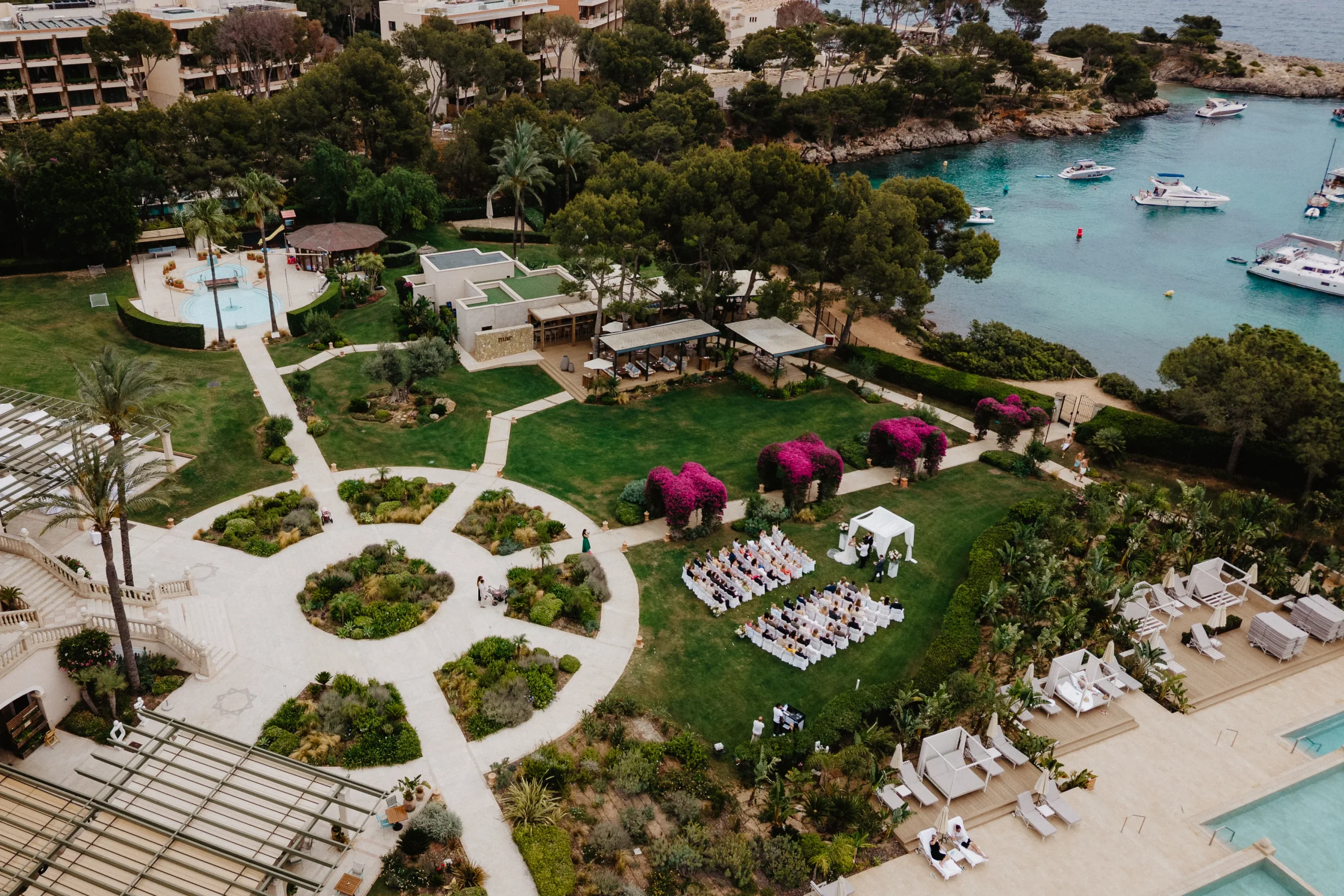
A wedding cannot feel right by accident. Every couple hopes for a day that feels exactly as it should — but that feeling never simply arrives. Magdalena builds it from decisions made months in advance. How a room comes alive, how a pause lands, how a single guest feels expected — that’s the craft. This is the quieter, less visible side of what Magdalena and the Dybiec Wedding team hold for every couple. It’s true whatever shape the wedding takes.
Contents
- The feeling you can’t ask for directly
- Used to five-star service — but never as the guest of your own life
- What guests notice, and what is quietly arranged
- Dybiec Wedding Perspective: wedding day as the emotional foundation
- Magdalena: planner and celebrant, one connected process
- The family-led model behind the day
- One day, or several — the same principle either way
- The Mallorca Edit: watch this in practice
- Frequently asked questions
The feeling you can’t ask for directly
Every couple describes the same hope, in different words: they just want the day to feel right. That feeling resists a direct request — you build it from decisions most guests will never consciously notice. Pacing, light, sound, sequence, silence: each one shapes the atmosphere before anyone can name why a moment felt so good.
This is the practical difficulty behind an emotional wish. The thing couples want most is precisely the thing that resists a checklist. Handled well, no one sees the structure — only the result. You’ll find this theme often on The Mallorca Edit, Magdalena’s ongoing series on what actually goes into a Mallorca wedding. It goes beyond what makes it onto Instagram.
Used to five-star service — but never as the guest of your own life
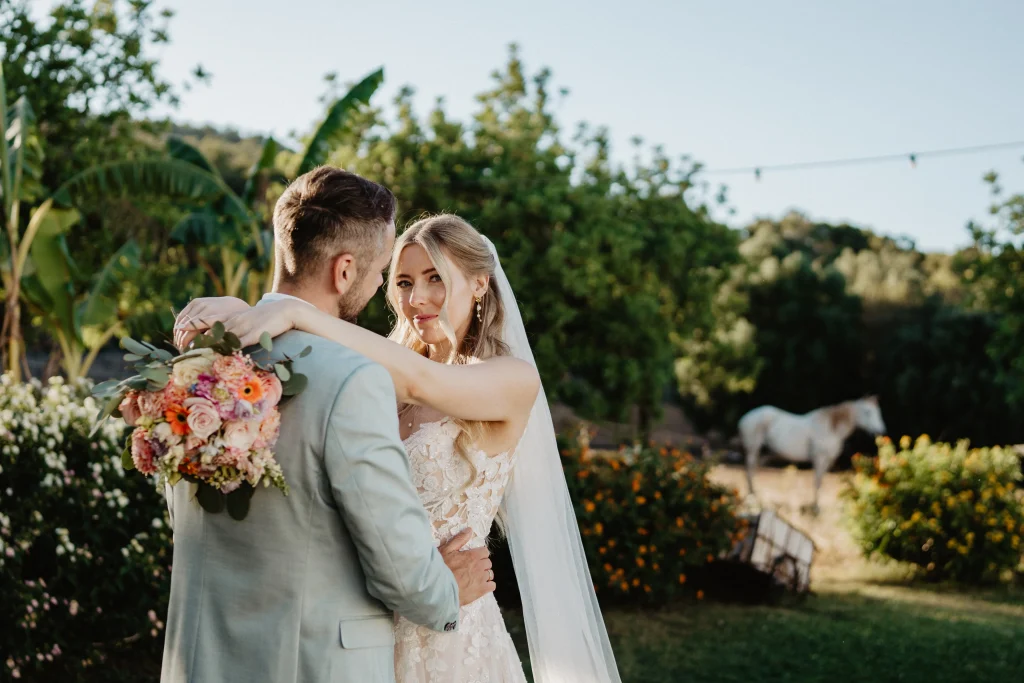
Couples arriving from the UK or the US usually know exactly what good hospitality feels like. They have simply never experienced it while standing at the centre of it themselves. A wedding is the one occasion where a person hosts the evening and, emotionally, is also its most important guest.
Years of good hotels, good restaurants and considered service train a sharp instinct for quality. That instinct is usually reliable. On a wedding day, it has nowhere to stand. There is no outside vantage point left, because the couple is inside the experience they are also responsible for.
What this means for American and British couples
For couples planning from the US, distance itself often compounds this disorientation. A wedding takes shape 5,000 miles away. They can’t know whether what looks beautiful in a photograph will actually work for sixty guests arriving from three continents. This is exactly why local representation matters — someone on the ground in Mallorca, reachable without timezone anxiety. For American couples, it tends to matter more than any single design choice.
UK couples arrive with a different, quieter concern. Mallorca already feels close and familiar, almost a natural extension of home. Still, they want the ceremony to feel personal rather than procedural. They want the seamless guest travel and symbolic-ceremony freedom that a UK legal wedding rarely allows. What they’re really asking for is flawless execution, not just a beautiful setting.
You can read more about how Magdalena works with couples from both markets on Meet Magdalena. For the story behind the studio itself, see Our Story.
If you’re planning from abroad and unsure what’s realistic, begin a private conversation with Magdalena before committing to a venue. She’ll help you find the direction that genuinely works for your guests and your day.
What guests notice, and what is quietly arranged
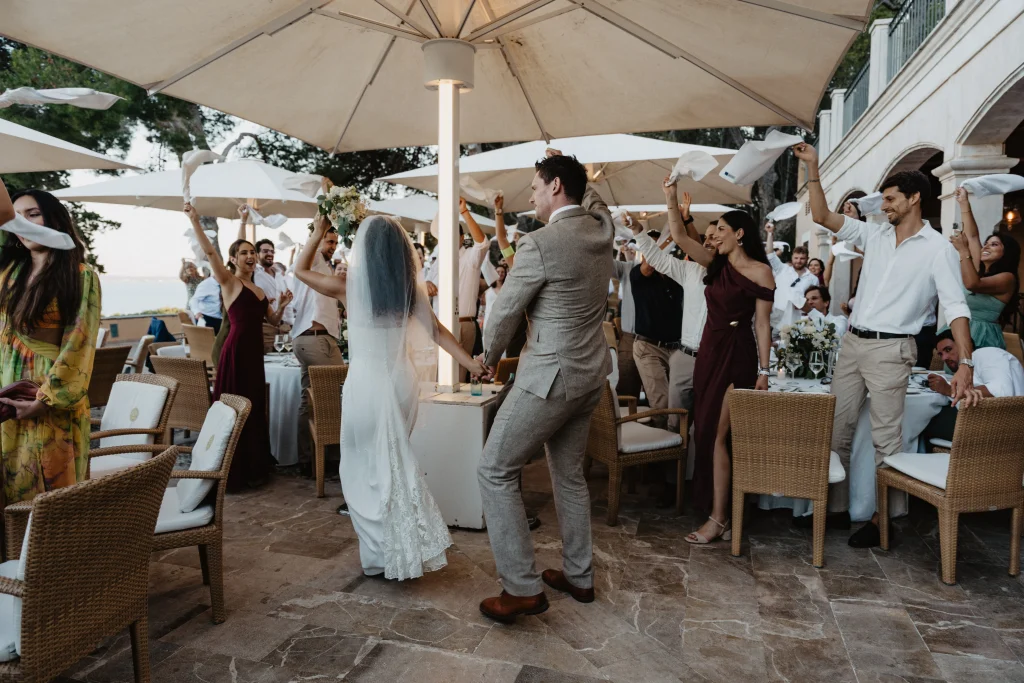
Guests never see the individual decisions behind a wedding’s atmosphere — only the outcome. What feels effortless to them is usually the product of very deliberate, unglamorous planning.
| What guests say afterwards | What was actually planned |
|---|---|
| “The room just felt right when we walked in” | Light direction, seating sightlines, the first sound guests hear on arrival |
| “There was never an awkward silence” | Timing between ceremony, drinks, speeches and dancing, built to the minute |
| “Everyone seemed properly looked after” | Guest logistics, dietary detail, transport timing, a clear point of contact for every guest |
| “It felt calm, never rushed” | Pacing decisions made weeks earlier, not improvised on the day |
None of this is decorative. It sits closer to logistics than to styling — which is why couples underestimate this part when planning from abroad. It’s also why choosing a venue in Mallorca is rarely just an aesthetic decision. The venues that photograph best aren’t always the ones where accommodation, transport and guest flow work together without friction. Instead, the right direction matches guest accommodation, transport, supplier access, ceremony timing and the flow of the day. It’s not just about finding the most beautiful setting. Our guide to Mallorca wedding venues looks at this from the logistics side rather than the styling side.
Dybiec Wedding Perspective: wedding day as the emotional foundation
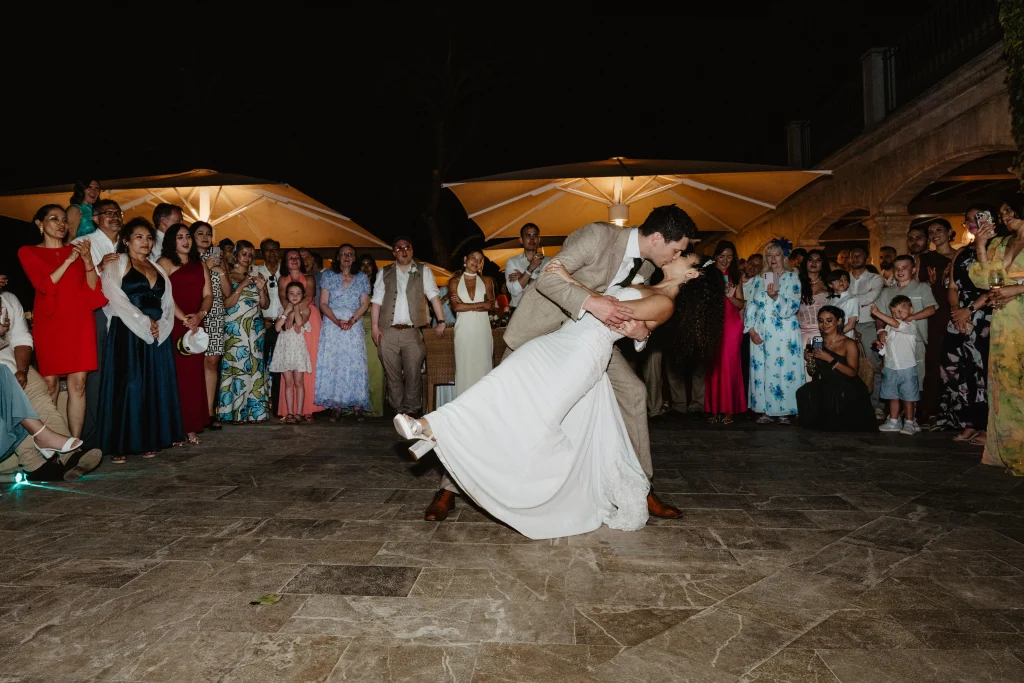
The wedding day itself is the emotional foundation of every Dybiec Wedding celebration, not a shorter version of something else. Ceremony, dinner, music, atmosphere, guests, family presence and the flow of the day: this is the complete experience. It stands alone, or it sits at the centre of a longer arc.
Dybiec Wedding holds these details so the couple and their families can be fully present. They don’t have to manage the day from the inside while it happens to them. That is a practical distinction, not a sentimental one. It is the difference between two kinds of couples. One spends the wedding checking whether the timeline is holding. The other simply experiences their own celebration.
This kind of detail shapes your Mallorca Wedding Story. Think of how your guests arrive, how the ceremony feels, how dinner unfolds, how the music carries the evening. We hold everything else calmly in the background, so you don’t have to hold it yourself.
Magdalena: planner and celebrant, one connected process
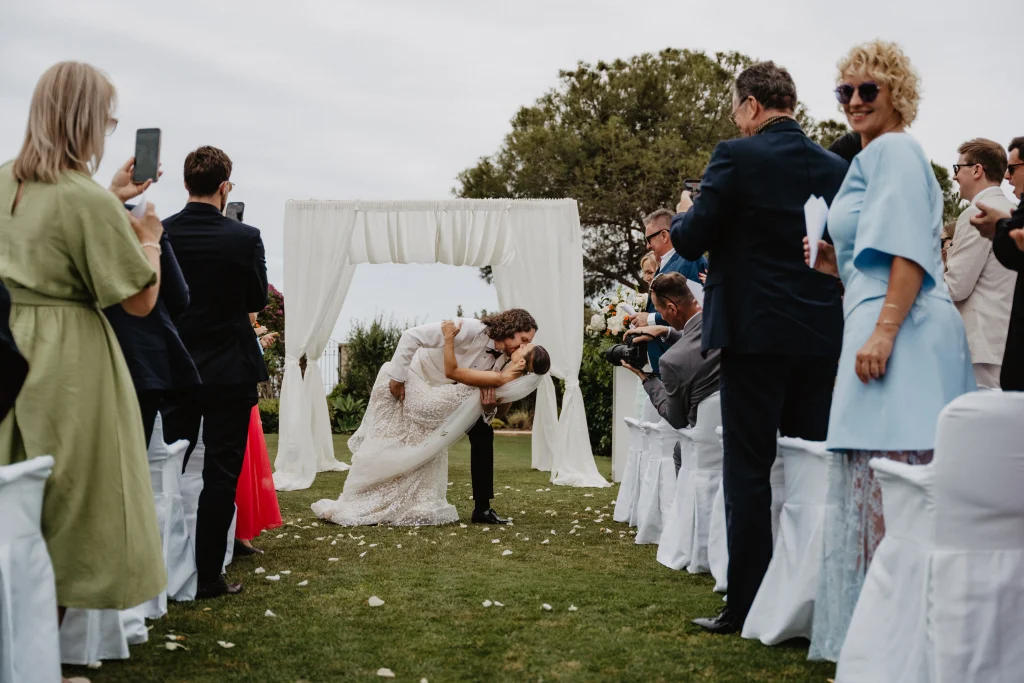
We guide the planning and also lead the symbolic ceremony. That means the emotional centre of the day connects to the entire wedding experience. Magdalena doesn’t add it as a separate piece at the end. This matters most for couples choosing a symbolic ceremony. Most international couples marrying in Mallorca do, for legal and practical reasons.
Magdalena learns the couple’s story during planning, long before the ceremony itself. She carries that same tone into the moment she leads it. It’s a distinction worth understanding before choosing a celebrant separately from a planner. You can read more about symbolic ceremonies on the FAQ page, and see the wider approach on Meet Magdalena.
The family-led model behind the day
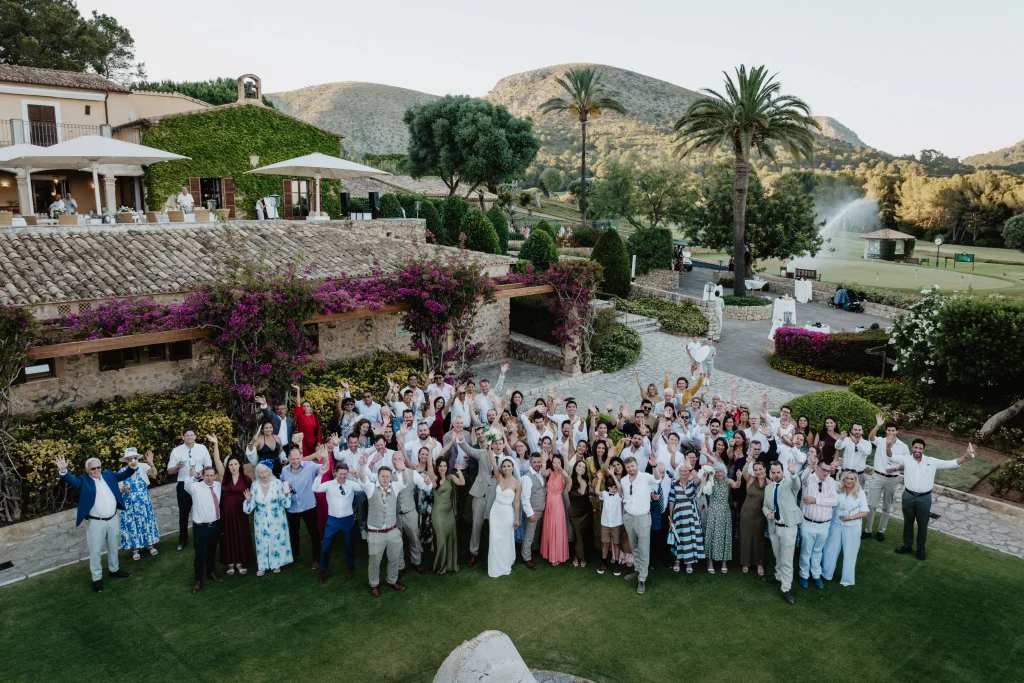
Dybiec Wedding is a family-led studio, and that structure is an operational advantage, not a sentimental detail. Magdalena leads planning and ceremony; Urszula leads flowers and decoration; Jimy leads music; Krzysztof handles the technical and logistical side. Because everyone works from one shared plan rather than several separate briefs, there’s less room for disconnect. That disconnect happens when suppliers coordinate around each other instead of with each other. It’s one of the more common, least visible reasons a beautifully styled day can still feel slightly fragmented.
One day, or several — the same principle either way
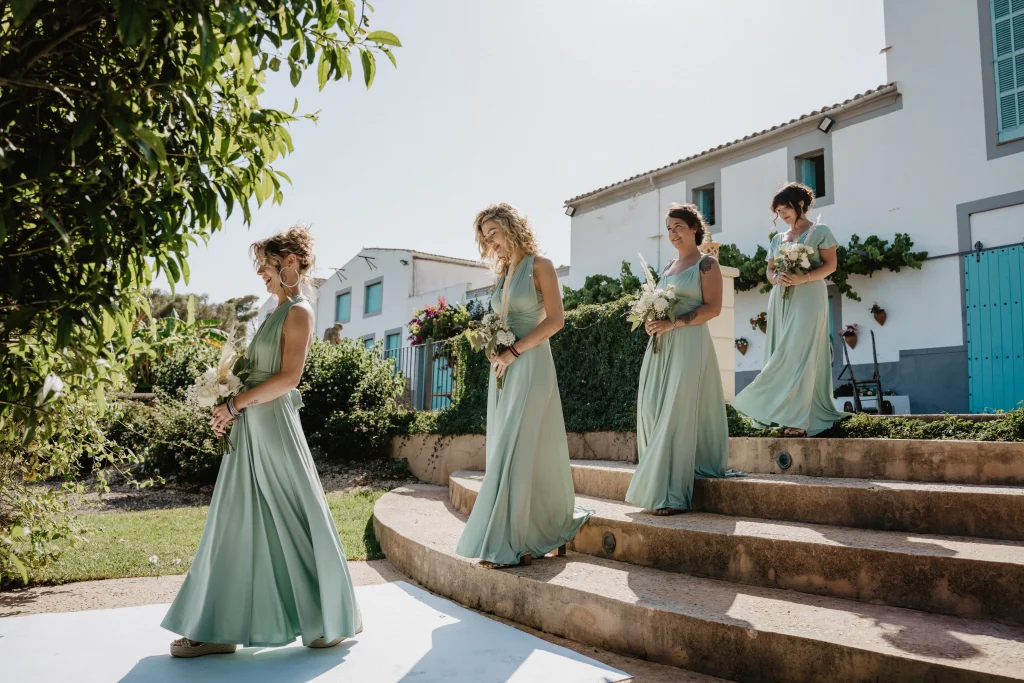
A celebration might be one carefully designed day. Or it might extend into a welcome gathering and a slower farewell. Either way, the same guiding principle applies: a longer wedding is not the aspiration — a more meaningful experience is. A single, carefully designed wedding day is a complete premium experience in its own right.
Some couples extend that foundation into a wider rhythm. This suits those whose guests are travelling from North America, Australia or Scandinavia. The rhythm looks like this: Day 1 for Arrival & Connection, Day 2 for Ceremony & Celebration, and Day 3 for a Slow Farewell. That extension exists to support the wedding day and the comfort of guests. Many of them have already given up a great deal more than an afternoon to be there. Welcome and farewell moments should support the wedding day, not complicate it or stretch the budget thin. It is not a bigger package, and not automatically the more luxurious choice.
If a wider guest rhythm interests you, this piece on designing a multi-day Mallorca celebration is worth reading. It looks at how couples actually use that extra time, and what it genuinely adds for guests travelling long distances.
The Mallorca Edit: watch this in practice
This idea is easier to see than to describe. On The Mallorca Edit, Magdalena’s educational YouTube series, several episodes walk through exactly this. They show how a day unfolds — from guests landing at Palma airport to the last song of the night. The episodes also show what changes when a couple plans with someone holding that structure, versus assembling it themselves. It’s a useful companion to this article if you want to see the process, not just read about it.
Before committing to a venue, ask Magdalena what would be realistic for your guest list and your budget. Ask, too, about the feeling you actually want the day to have.
Frequently asked questions
Can Magdalena really design a wedding to feel a certain way, or is that just marketing language? It’s a genuine planning discipline, not a figure of speech. Magdalena decides pacing, sightlines, sound and sequence weeks in advance, not on the day itself. That’s what allows a wedding to feel calm rather than simply hoped-for.
Why do couples from the UK and USA find this hard to picture, even though they’re used to excellent hospitality? Because they’re used to being the guest of good service, not its centre. People judge a hotel stay or a fine restaurant from the outside. A couple lives their wedding from the inside. That removes the objectivity people usually rely on to tell whether something is going well.
Does a longer, multi-day format automatically create a more meaningful wedding? No. Length is a structural decision, not an emotional one. A single, well-planned wedding day can feel just as considered as a multi-day celebration. The difference is how much time guests spend inside the experience, not how much care goes into it.
More questions, answered
What does Magdalena actually do that a couple planning alone from abroad would likely miss? Mostly the parts nobody thinks to plan: the exact pacing between key moments. Add the experience of the very first guest to arrive. It also includes the transitions where energy can dip or lift, and the guest logistics — transport timing, seating, service rhythm. Guests never notice these details when Magdalena gets them right. They notice immediately when something goes wrong.
How far in advance does this kind of planning need to start? Typically well over a year, for a Mallorca destination wedding with an international guest list. The emotional pacing depends on logistics — venue, suppliers, timing. Magdalena needs to lock those in early, so she can shape them deliberately rather than settle for whatever is left.
Is this level of attention only relevant for large, elaborate weddings? No — intimate weddings of twenty to fifty guests benefit from it as much as larger ones, arguably more. That’s because every individual guest experience is more visible in a smaller room. Scale changes the logistics. It doesn’t change the principle.
(Schema note: structure the six FAQ items above as FAQPage schema on publication. Format the comparison table as a standard Table entity. Mark up the piece as Article, with Magdalena as author.)
Before committing to a venue, begin a private conversation with Magdalena. She’ll help you understand what kind of Mallorca wedding direction would work for your guests, your budget and your vision. Or start with The Mallorca Wedding Guide to see the first decisions couples often underestimate.

