

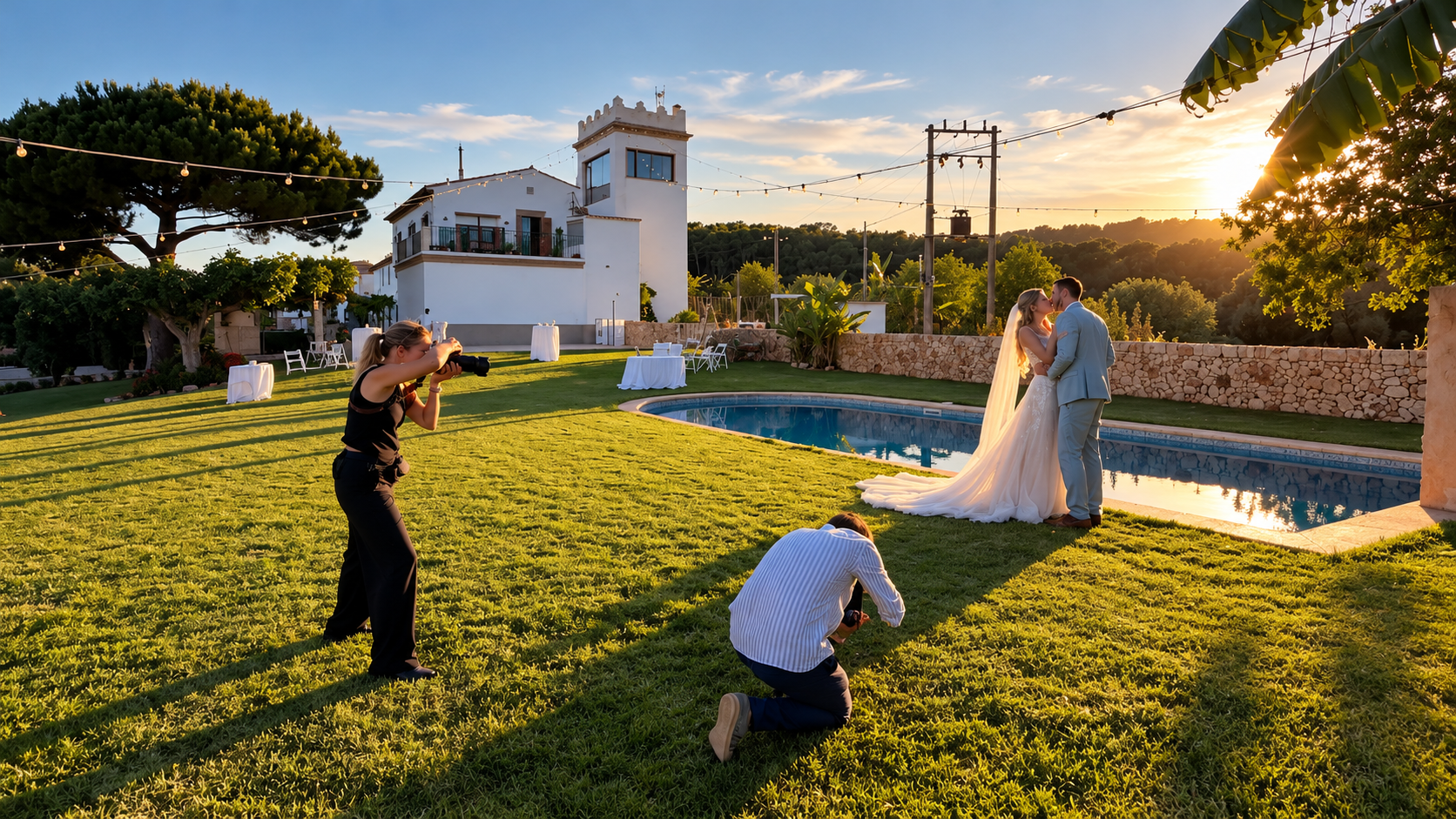
Choosing between a wedding videographer and a content creator in Mallorca starts with one question: what do you want to watch afterwards? A videographer usually delivers an edited film with clear sound from your vows and speeches. A content creator usually delivers fast, short clips for social media and behind-the-scenes moments. Some suppliers now do both, so a job title is not enough. Compare what each person will hand you, how soon, and how they will work alongside your photographer at moments that happen only once.
At the weddings she plans, Magdalena Dybiec, a local wedding planner and celebrant, builds one shared plan for the photographer and the videographer. This guide shows what goes into that plan, so you know what to ask for before you book anyone.
In this guide
- What actually changes between a videographer and a content creator?
- How do a photographer, videographer and content creator compare?
- Does a content creator replace a videographer?
- What happens when all three work at the same wedding?
- How should the team coordinate the key wedding moments?
- How should shot priorities be agreed?
- Which combination suits your Mallorca wedding?
- How does your planner bring the team together?
- Frequently asked questions
- Build the coverage team around your wedding
What actually changes between a videographer and a content creator?
The difference is not the camera. It is the result each person is hired to create. A videographer works towards a structured film. A content creator works towards quick, social-first material. So ask what is included before you book.
A videographer usually plans sequences, protects key camera angles and records dedicated audio for your vows and speeches.
A content creator usually captures vertical clips, candid phone footage and behind-the-scenes moments. Raw files or edited Reels may arrive within a day or two.
The lines are blurring, though. Some content creators now use wireless microphones and record whole ceremonies. Some videographers offer vertical edits and quick teasers.
So compare deliverables, not titles.
How do a photographer, videographer and content creator compare?
All three attend many of the same moments, but each leaves you with something different to open afterwards. The table shows the usual pattern. Your contract matters more than any general description.
| Photographer | Videographer | Content creator | |
|---|---|---|---|
| Main result | Edited still photographs | Edited film, sometimes with longer ceremony or speech films | Short-form video, candid clips and social edits |
| How they work | Looks for single frames, reactions and portraits | Builds sequences and records movement and sound | Moves quickly and captures informal moments |
| Audio | Not part of the product | Often a major part of the service | Varies from phone audio to dedicated microphones |
| Vertical social content | Sometimes an extra | Increasingly an add-on | Usually a main output |
| Delivery | After an editing period, sometimes with an early preview | After the longest editing period | Often the fastest |
Picture your first morning back home. If you want to hear your vows again, check who is recording them and how. A strong Instagram profile will not tell you that. It matters even more at an outdoor ceremony by the sea, where a breeze can carry words away from a phone held a few rows back.
If your videographer already includes several vertical edits, you may not need another person just for Reels.
Does a content creator replace a videographer?
Not automatically. If short clips are exactly what you want, a content creator alone can be a sensible choice. If you want a structured film, continuous ceremony coverage or clearly recorded speeches, the contract must say so.
The reverse also holds. Booking a videographer does not guarantee Instagram-ready clips within a day or two. If fast social content matters to you, check that it is included.
Think about the files you want to open after the wedding. Choose your suppliers from that list, not from the titles you assume you should book.
What happens when all three work at the same wedding?
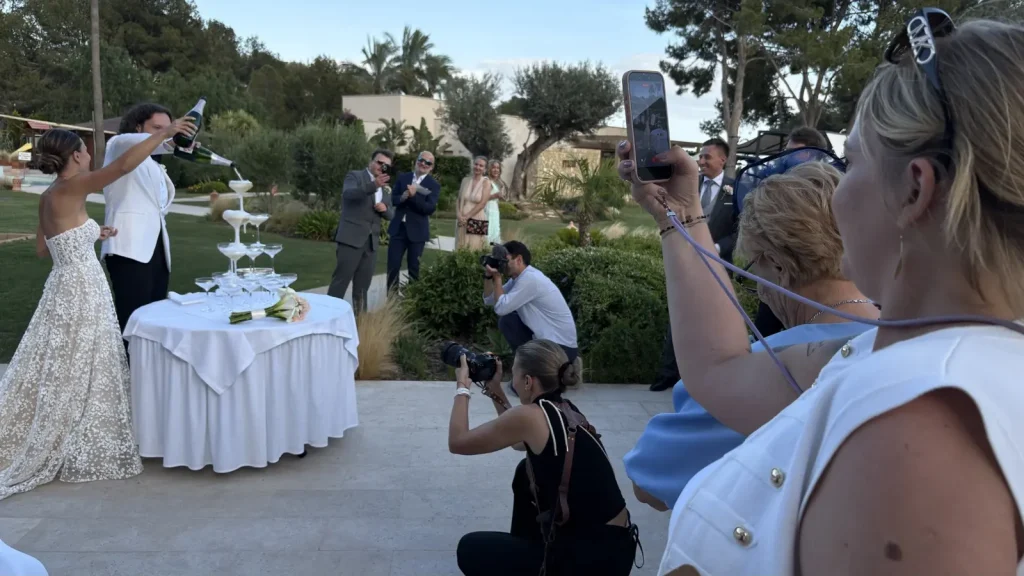
They can work together without the day feeling like a film set. The problem is not the number of cameras. It is three people reaching for the same position at a moment that cannot be repeated.
Imagine your ceremony entrance. Three people with cameras walk backwards down the same aisle, and your guests watch the crew instead of you.
A shared coverage plan prevents this. Everyone knows the key moments, where they can stand and who has priority for each angle.
This matters most at a destination wedding. A photographer flying in from the UK may see your venue, and the rest of the team, for the first time on the day itself. It is one reason Magdalena prefers to work with local photographers and videographers. Good coverage records the celebration without making your guests feel they are being filmed.
One more check before you add anyone. Some photographers and videographers have a clause in their contract saying that no other photographer or filmmaker may work at the wedding. Read yours before you book a second person with a camera.
How should the team coordinate the key wedding moments?
A handful of moments carry the greatest risk of blocked angles and competing instructions. A good plan settles who leads each one, where everyone else stands and when they can move. All of this is agreed before the day, so nobody negotiates in front of your guests. Here is what that looks like, and what to ask your planner about.
First look. One person should have the main angle and give you directions. You should not be asked for three separate reveals. After the first real moment, there is more freedom for close-ups and other angles.
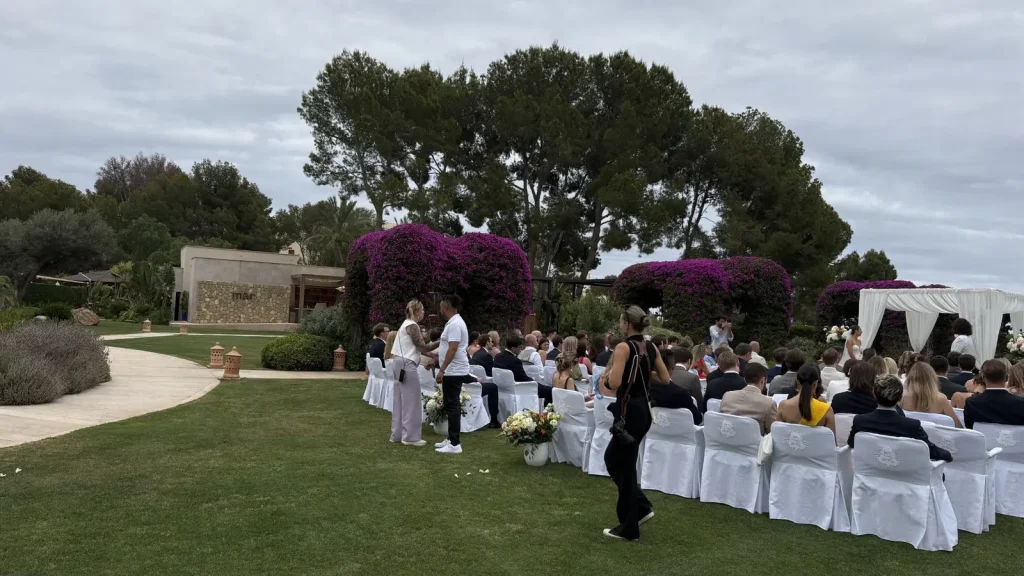
Ceremony. This needs the strictest rules. Camera positions are agreed before guests sit down, along with who may use the aisle and which views stay clear. If you are marrying in a church, ask early where cameras may stand during the service. A Catholic wedding in Mallorca can come with its own arrangements.
Sound needs its own plan. If the videographer records your vows and readings, the microphones are fitted before the ceremony starts. Two people clipping on separate microphones at the last minute creates work, not coverage.
It is also worth deciding whether guests’ phones and live posting are welcome during the ceremony.
Entrance to dinner. It is short and highly visible. The most important angle is chosen in advance, and other coverage comes from the side or rear. Priority does not always belong to the same supplier. It follows what you have said matters most.
Speeches. The videographer may need an uninterrupted angle and clean sound. The photographer needs reactions. A content creator, if you have one, may want shorter emotional or funny moments.
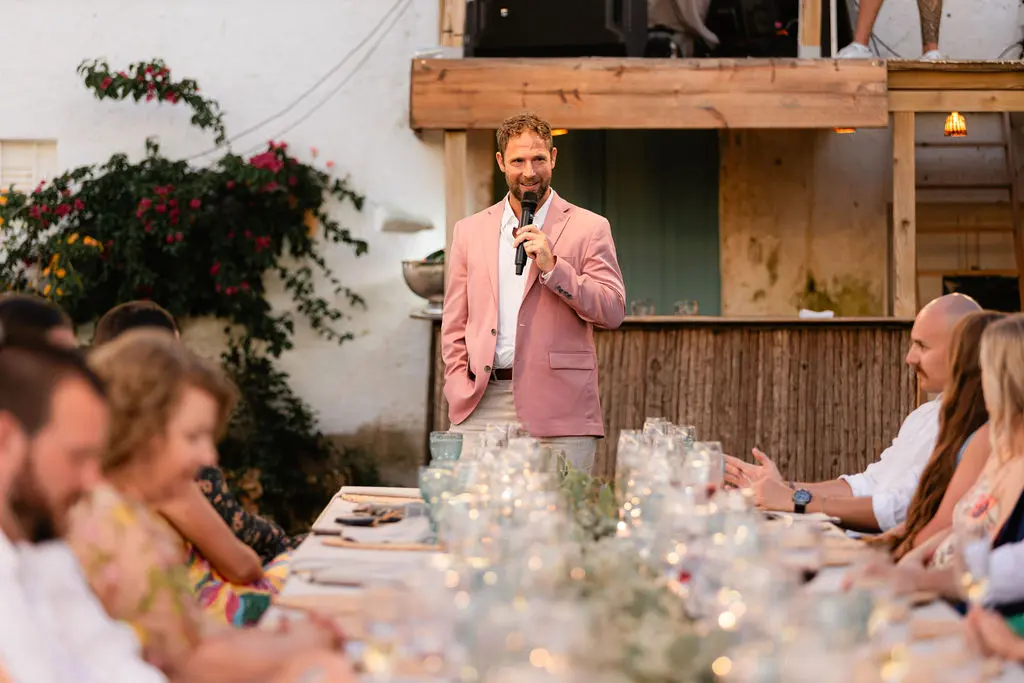
Nobody should keep crossing the main video angle. But fixing everyone to one spot loses the reactions that make speeches worth recording. The team needs boundaries, not rigidity.
First dance. The essential shot is agreed before the music starts, along with where any fixed equipment stands. Once that is protected, everyone else can move freely around the dance floor. You should be dancing with each other, not checking where the cameras are.
Golden hour. The soft light before sunset does not last long, and both your photographer and your videographer will want you in it. A good plan shares that window out in advance, so you are not pulled in two directions and you are back with your guests sooner.
How should shot priorities be agreed?
A short shared plan prevents most conflicts. It names the moments that cannot be repeated, who leads each one and where people can stand. Everyone then works from the same timeline and the same list of must-haves.
| What to agree | What it means |
|---|---|
| Moments you cannot repeat | First look, entrances, vows, ring exchange, kiss, speeches, key traditions, first dance |
| Who gets the best spot | Who has the main angle when several people want it |
| Views to keep clear | Lines of sight nobody crosses during the ceremony and speeches |
| When people can move | Moments when suppliers can change position without walking into each other’s shots |
| Who records the sound | Who records vows and speeches, with what equipment and what backup |
| One timeline | Every supplier works from the same, current version |
| What can be posted | What can go online, when, and which moments stay private |
| Contract clauses | Any exclusivity clause checked before another supplier is added |
Keep your must-have list short. Name only the few things you would genuinely regret missing.
A grandparent’s reaction may matter more than another outfit-change clip. Complete speeches may matter more than ten extra Reels. Another couple will choose the opposite, and that is fine.
Which combination suits your Mallorca wedding?
There is no standard answer, because each service meets a different need. Start with what you want after the wedding, then match the team to it.
| What you want afterwards | Coverage to consider |
|---|---|
| Edited photographs as your main record | Photographer |
| A moving story with recorded voices and speeches | Photographer and videographer |
| Photographs plus fast vertical and behind-the-scenes clips | Photographer and content creator |
| Film, dedicated audio and fast social material | All three |
| Short-form video without a traditional film | Photographer and content creator, if the scope covers what matters to you |
| A videographer who includes vertical edits | Photographer and videographer may be enough |
So the better question is not whether every Mallorca wedding needs a content creator. It is this: what do you want to remember, hear, watch and share afterwards?
Not sure which mix fits your day? Tell Magdalena what you have in mind and she will help you narrow it down.
How does your planner bring the team together?
A planner does more than send each supplier an arrival time. Photography and video need to sit inside the same timeline as everything else. When one part moves, several suppliers are affected, and someone local needs to make the call.
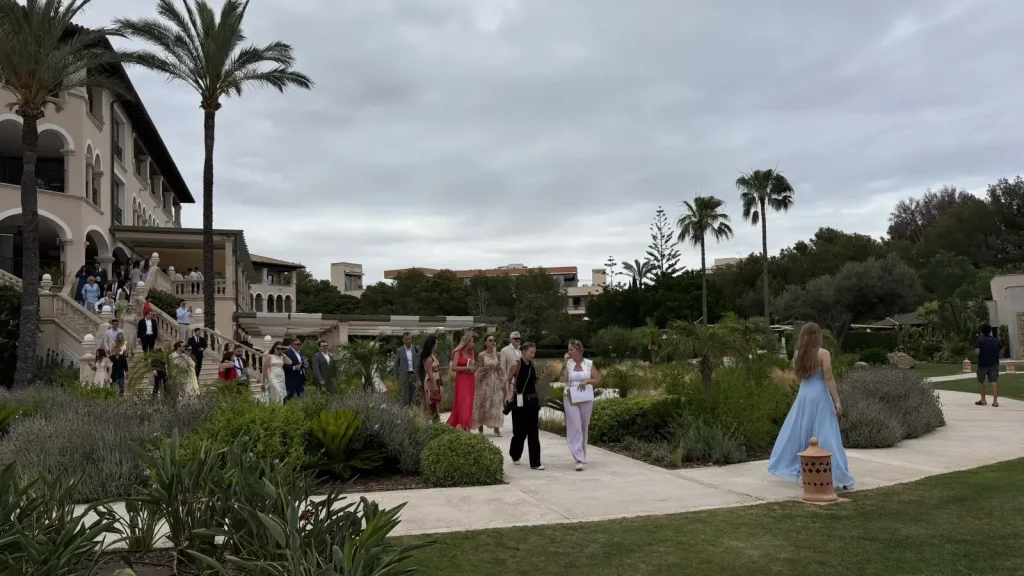
Getting ready may overlap with detail photography. A first look affects ceremony preparation. Portraits must fit around time with your guests. The dinner entrance affects catering, and speeches affect service and sound.
Magdalena puts it simply: “We work as one team, for you and for your guests.”
She coordinates photographers and videographers around preparations, first looks, portraits, entrances, speeches and first dances. You can meet one of the filmmakers she works with in this feature on cinematic wedding videographer Tom.
If dinner shifts, you should not have to phone your photographer and your videographer separately about the new first-dance time. They receive the same update and adjust together.
Content creators sit outside the suppliers Magdalena arranges. If you book one yourself, share the final timeline with them and introduce them to your photographer and videographer before the day. That way they fit into the plan instead of working around it.
For more on how photography fits the day, read our guide to wedding photography in Mallorca that lets you stay present. You can see how real celebrations unfolded in Mallorca Wedding Stories and read what couples say about working with Magdalena and her team in the Dybiec Wedding reviews.
Supplier coordination is part of Magdalena’s Mallorca wedding planning services.
Frequently asked questions
Is a wedding content creator the same as a videographer?
No, although the services overlap. Content creation usually means faster, short-form material. Videography usually means a structured film with dedicated sound. Always compare the actual contract.
Do we need both a videographer and a content creator?
Only if you want both sets of outputs. If a film and fast vertical clips both matter, both can make sense. If one of them does not, you probably do not need both.
Can a videographer make Instagram Reels?
Many can. Ask how many vertical edits are included and when they arrive.
Can a content creator record our vows and speeches?
Some can. Short clips do not mean continuous coverage or dedicated audio. Ask whether the whole moment is recorded, how sound is captured and whether there is a backup.
When should the photographer, videographer and content creator speak to each other?
Before the final wedding-day timeline is locked. They do not need a long meeting. They do need to know the priorities, key positions and who to ask on the day. If you book a content creator yourself, make sure they are part of that conversation.
Build the coverage team around your wedding
The right team is the one that fits how you want the day to feel and how it needs to move. More people recording is not the aim. The aim is for the right people to capture the right moments without taking you away from them.
Send Magdalena your date and your venue, or the venues you are considering. If you already know what matters most to you, such as a film, recorded vows and speeches or edited photography, add that too. In return, you will get a clear view of the photo and video team that fits your wedding, and how it can work from one timeline. Start the conversation with Magdalena.

