

You have found the finca. The photographs feel right, the date is available, and the venue asks for a deposit to secure it. Paying now feels safer than losing the place.
Yet unanswered questions can change the music, the final cost and the wet-weather plan. They can even decide how guests reach the venue.
Before paying a Mallorca wedding venue deposit, get written answers to these 15 questions to ask a Mallorca wedding venue. They will help you compare the shortlist as a complete system, not only as a beautiful setting. Below, I explain what I would check as a Mallorca wedding planner. Do this before signing a contract or transferring money.
Contents
- Why these questions matter before you pay a deposit
- Music and atmosphere
- 1. What time must outdoor music finish, and is there a sound limit?
- 2. Can music continue indoors?
- Plan B, capacity and guest flow
- 3. What is the real plan B capacity?
- 4. Does every part of the guest journey work?
- Catering and supplier conditions
- 5. Is catering exclusive, and what does the price include?
- 6. Which other suppliers are compulsory or restricted?
- Technical requirements and accessibility
- 7. Are power, lighting and sound sufficient?
- 8. Are toilets and access suitable for every guest?
- Setup, breakdown and transport
- 9. When can suppliers start setting up?
- 10. When must everything be removed?
- 11. Can coaches, taxis and suppliers reach the venue?
- 12. Is accommodation available on-site or nearby?
- Costs, payments and contractual protection
- 13. What is included, and will the venue be exclusively yours?
- 14. What is the payment schedule, and which costs can change?
- 15. What happens if you cancel, postpone or face force majeure?
- The Dybiec Wedding perspective: reading the answers in context
- A Mallorca wedding venue checklist for your shortlist
- Frequently asked questions
- Before you commit
Why these questions matter before you pay a deposit
Before you pay a deposit, you still have freedom. You can compare venues, question unclear terms and walk away if something does not fit. Once the contract is signed, you are planning inside that venue’s rules. That is why I prefer to find the difficult answers before the emotional decision becomes a financial commitment.
Some answers affect the atmosphere. Others affect the final bill. Music hours, plan B, supplier restrictions and coach access can all change the venue decision. So can IVA, staffing, cleaning, overtime and cancellation terms.
I would never rely only on what was said during a venue tour. Important points should be confirmed in writing, and the contract should reflect those answers. If something matters enough to influence your decision, it matters enough to be documented.
Use this guide after choosing your venue direction and creating a shortlist. If you are still deciding which property type fits, start with our guide to choosing a Mallorca wedding venue. Then return to these questions before paying any deposit.
Music and atmosphere
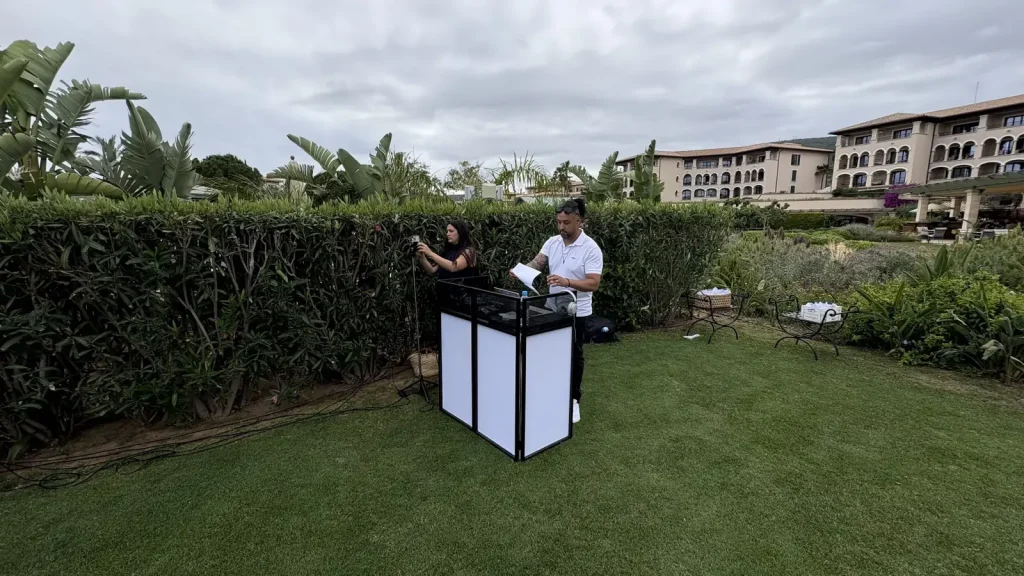
Music is one of my first checks because the rules vary between venues. A finca ten minutes away may have different hours because of its licence, municipality, location or neighbours. Never assume the party can continue because another Mallorca venue allows it.
1. What time must outdoor music finish, and is there a sound limit?
Ask for the exact time amplified outdoor music must end. Also ask whether the venue uses a decibel limit or sound limiter. Check whether the rules change by season, weekday or event area. “Around midnight” is too vague for planning dinner, speeches and the first dance.
This answer can change the whole rhythm of the evening. If outdoor music ends early, we may need to move dinner, speeches, the first dance or live performances forward. That does not automatically make the venue wrong. It simply needs to fit the kind of celebration you actually want.
Confirm whether restrictions apply only to amplified music or to every outdoor performance. Acoustic musicians and background music may follow different conditions. Get the permitted hours and sound limits in writing.
2. Can music continue indoors?
Some venues allow guests to move into an indoor room after outdoor music ends. Others require all amplified music to stop at the stated time.
If music can continue indoors, I would not stop at “yes”. I want to see the room. Does your guest count really fit? Is it ventilated? Does it feel like a party space or like a compromise? How far is it from dinner, and will moving sound equipment add another production cost?
The transition should feel intentional. It should not depend on an unsuitable room that was never designed for dancing.
Plan B, capacity and guest flow
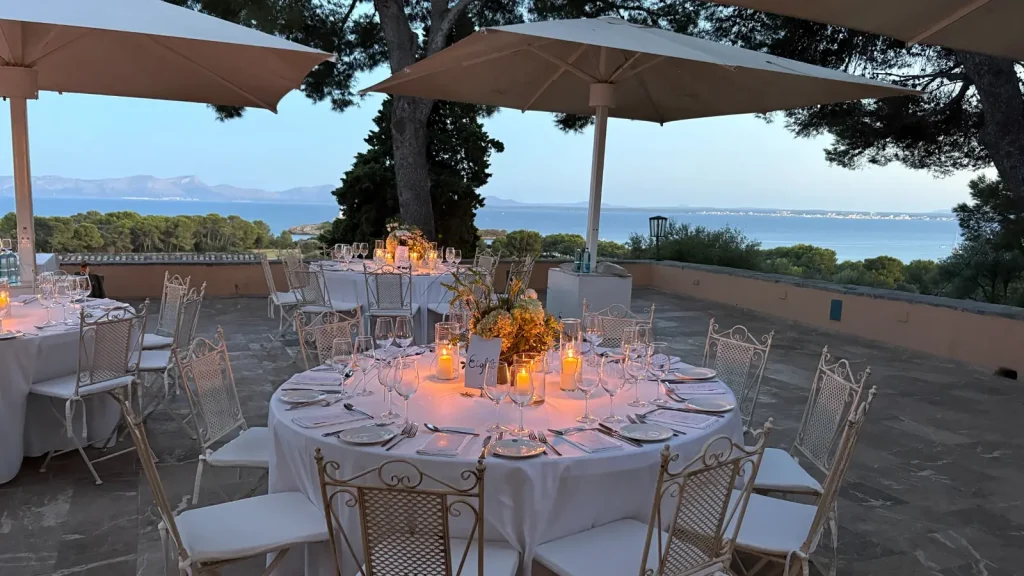
Mallorca offers many beautiful outdoor wedding days. Even so, I would never book a venue without testing plan B. Rain, wind or unusual temperatures can change the day quickly. The alternative should still feel like your wedding, rather than temporary shelter.
3. What is the real plan B capacity?
When a venue tells me its indoor capacity, I want to know what that number actually means. How many guests can sit for dinner comfortably? Allow for tables, service routes, entertainment and a dance floor.
This is where headline capacity can be misleading. A terrace may be perfect for drinks but impossible for dinner. A room that holds 120 people standing may feel crowded with 80 seated guests, catering routes and a dance floor. I would ask to see a realistic layout for your own guest count.
Also ask when the weather decision must be made and who makes it. Check whether moving furniture, catering or production creates extra costs.
4. Does every part of the guest journey work?
A venue must work beyond its ceremony setting. I mentally walk through the wedding from the first coach arrival to the final departure.
I look at how your guests move between the ceremony, aperitif, dinner, dancing and toilets. I notice steps, gravel, slopes, long walking distances and dark paths. Then I ask the same question again for the wet-weather version of the day.
This review is especially important for children, older guests and anyone with reduced mobility. A strong venue plan protects comfort without separating guests from the celebration.
Catering and supplier conditions
Exclusive or approved suppliers are not automatically a disadvantage. They may know the property extremely well. What matters is understanding which relationships are compulsory. You also need to know how they affect choice and cost.
5. Is catering exclusive, and what does the price include?
Many venues use an in-house caterer or an approved catering list. This can simplify logistics and maintain familiar service standards. It can also limit menu options or affect your budget.
Ask for a current catering proposal based on your likely guest count, rather than a brochure price. Check food, drinks, staff, tableware, kitchen equipment and setup. Include children’s meals, supplier meals, dietary requirements and late-night food.
Confirm whether IVA is included. Also check corkage, cake service, menu tasting and overtime charges. Compare the full service, not only the headline price per guest.
6. Which other suppliers are compulsory or restricted?
Ask whether you must use nominated companies for production, sound, lighting, furniture or security. Then confirm the rules for photographers, florists, musicians, celebrants and entertainment.
I do not reject a venue because it has an approved supplier list. Those suppliers may know the site very well. We still need to check whether their services suit your wedding. Their full cost must enter the budget from the beginning.
Ask whether outside suppliers need approval, insurance or specific licences. Confirm any access fee, commission or administration charge before you sign.
Technical requirements and accessibility
Power, sound and toilets rarely make couples fall in love with a venue. However, they can create expensive problems later. I check them before treating the venue as a serious option.
7. Are power, lighting and sound sufficient?
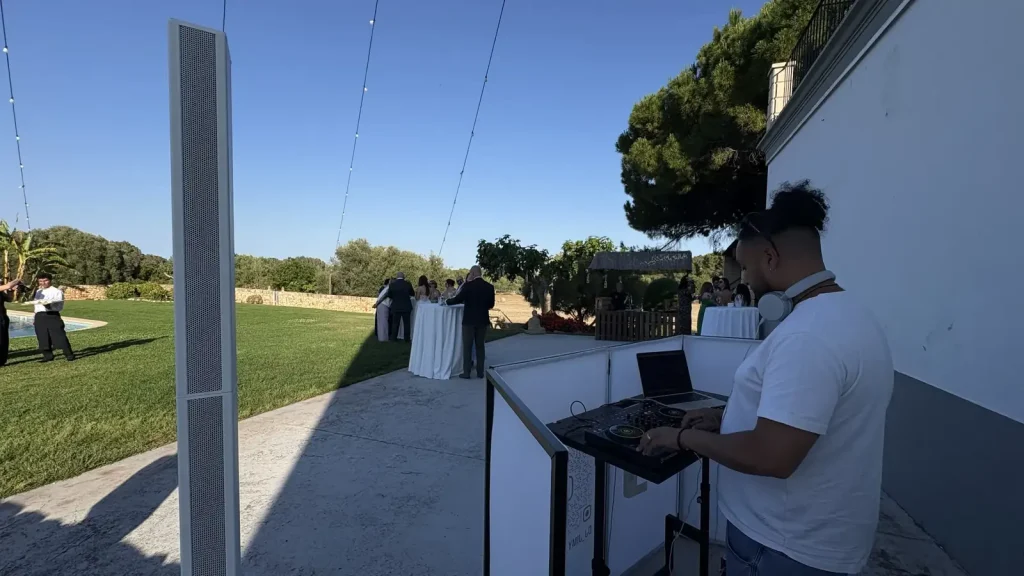
Ask for the available electrical capacity in each event area. Catering, lighting, sound and production equipment may operate at the same time.
Some rural fincas need a generator or extra distribution when catering, lighting and sound operate together. Confirm who specifies the equipment, who supplies it and who pays. Otherwise, the venue budget may look lower than it really is.
Ask whether basic architectural lighting is included. Then confirm what additional lighting is needed for dinner, paths, parking and breakdown. Request any venue-specific sound equipment requirements from your production supplier.
8. Are toilets and access suitable for every guest?
Confirm the number and location of permanent toilets. Ask whether additional facilities are needed for your guest count. Private estates may require hired luxury toilets.
Check accessible routes from arrival to every main event area. Look for steps, gravel, steep slopes and uneven ground. Ask about an accessible toilet and suitable parking or drop-off points.
Tell me before booking if a guest has reduced mobility or needs specific support. We can test the real route with that person in mind. A terrace may look elegant in photographs but remain difficult to reach.

Setup, breakdown and transport
The wedding day depends on work completed before guests arrive and after they leave. Venue access rules can change staffing, deliveries and costs. I therefore check them early.
9. When can suppliers start setting up?
Ask when each supplier may enter the venue. Day-before access can help with complex production, furniture and floral work. It is not available at every property.
Confirm delivery windows, parking, storage and loading routes. Ask whether another event could restrict access on the previous day. Check who must supervise suppliers and whether that supervision is chargeable.
A short setup window does not necessarily rule out the venue. However, it can require larger teams and higher labour costs. The schedule must work for every supplier, not merely appear possible on paper.
10. When must everything be removed?
Some venues require complete removal immediately after the celebration. Others allow collection the following morning.
Same-night breakdown can affect staffing, transport and equipment hire. It may also require quiet working after the music finishes. Ask about waste removal, hired furniture, flowers and personal items.
Confirm charges for late collection or items left on site. Include the agreed breakdown window in supplier schedules and contracts.
11. Can coaches, taxis and suppliers reach the venue?
This is a very Mallorca-specific issue. Some beautiful fincas sit at the end of narrow roads or have entrances where a full-size coach simply cannot turn. I never assume transport will work because the venue has a car park.
Confirm the largest suitable vehicle and the available turning space. Ask where coaches wait and how taxis collect guests late at night. Check whether local restrictions affect pickups or parking.
Smaller shuttles can solve the problem. They also mean more journeys, more coordination and usually a higher transport budget. I check supplier access separately because delivery vehicles have different needs from guest cars.
12. Is accommodation available on-site or nearby?
Ask how many guests can stay at the venue and how rooms are allocated. Confirm minimum stays, check-in times, breakfast and accessibility.
If accommodation is off-site, review the surrounding area. Consider journey times, late-night transport and the availability of taxis. A nearby hotel cluster can simplify shuttle planning.
Do not assume that a property described as a finca includes guest accommodation. Confirm the exact number of licensed rooms available for your dates.
Costs, payments and contractual protection
Two venue proposals can look similar but produce very different final costs. An itemised total lets us compare like with like. A lower headline hire fee can otherwise be misleading.
13. What is included, and will the venue be exclusively yours?
Ask for an itemised list of inclusions and exclusions. Confirm which event spaces are included and when you may use them.
Find out whether the property is exclusive during your celebration. At hotels or estates, ask whether other guests can use shared spaces. Confirm that your planned event is permitted in the booked spaces and hours. Check furniture, lighting, cleaning, security, parking and venue staff. Also confirm utilities, waste collection, IVA, service charges and any damage deposit.
Identify costs that depend on guest numbers or event hours. These may include staffing, cleaning, security and overtime. Record refundable amounts separately from non-refundable fees.
14. What is the payment schedule, and which costs can change?
Confirm the deposit amount, payment dates and accepted currency. Ask when the final balance is due and whether card or bank fees apply.
Find out which prices are fixed at signing. Some services may change after the final guest count or annual supplier review. Ask when the guest count becomes binding and which changes remain possible afterwards.
The contract should explain late-payment consequences and any interest or administration fees. Keep written confirmations, invoices and payment receipts together.
15. What happens if you cancel, postpone or face force majeure?
There is no universal rule for venue deposit refunds. The answer depends on the signed contract and the timing of any change.
Ask what is retained if you cancel at each stage. Check whether a postponement is permitted and how a new date affects pricing. Confirm any deadline, administration fee or limit on date changes.
The contract should identify the booked spaces, permitted hours and each party’s responsibilities. Ask whether the venue requires wedding or public liability insurance. The force majeure clause should define relevant events and the process that follows. It should explain whether payments are refunded, credited or transferred. Consider independent legal advice if the wording is unclear or the commitment is substantial.
The Dybiec Wedding perspective: reading the answers in context
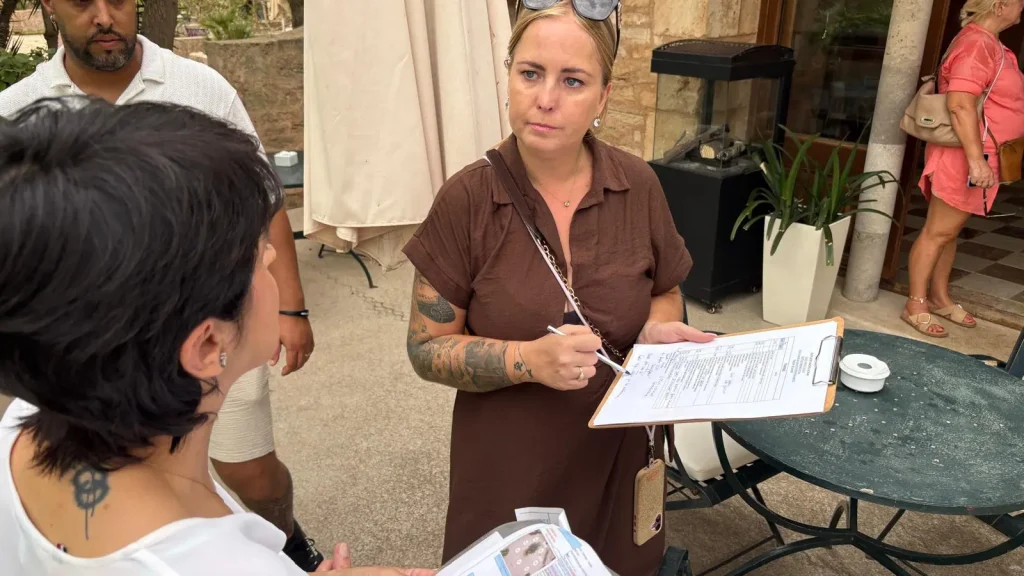
I am Magdalena, a Mallorca wedding planner, celebrant and personal guide. I read each answer in the context of your wedding. The same restriction can be irrelevant for one couple and decisive for another.
These details are harder to judge when you plan from abroad. You may see the venue once, in perfect daylight. You may never test the coach route or see the backup room set for dinner. The Mallorca Wedding Guide can help you prepare the earlier decisions before your visit.
I assess the ceremony space, catering, sound, transport and plan B as one system. Access affects transport. Music rules affect timing. Supplier restrictions affect the budget. Plan B affects guest comfort and the atmosphere.
A venue can be beautiful and still be wrong for your guest count, party plans or budget. I assess whether it fits the wedding you are actually creating. Many couples later mention this practical guidance in their Dybiec Wedding reviews.
Many restrictions are manageable when we know about them early. A music limit can change the schedule. A narrow road can lead us to shuttles. An exclusive supplier may work once we understand the complete cost. Late discovery is what usually creates the problem.
That is why I would rather ask one uncomfortable question before booking than solve an expensive surprise six months later.
A Mallorca wedding venue checklist for your shortlist
Use the same checklist for every venue you seriously consider. I would record both the answer and, where relevant, the contract clause that confirms it. That makes the comparison far more useful than relying on memory after several venue visits.
- Outdoor music finish time, decibel limit and sound limiter
- Indoor music option and capacity
- Wet-weather seated capacity with dance floor
- Catering terms and full per-guest cost
- Compulsory or restricted suppliers
- Power, generator, sound and lighting requirements
- Toilets, accessible routes and guest facilities
- Supplier setup and breakdown windows
- Coach, taxi and delivery access
- On-site and nearby accommodation
- Venue exclusivity, included spaces, IVA and extra charges
- Payment schedule and change deadlines
- Insurance, cancellation, postponement and force majeure terms
Place each venue’s total estimated cost beside the checklist. This prevents a lower hire fee from appearing cheaper when essential services are excluded.
Frequently asked questions
What are the most important questions to ask a Mallorca wedding venue?
Begin with music hours, real plan B capacity, the total cost and the contract terms. These points can change the atmosphere, logistics and financial risk. The complete 15-question list provides a more reliable comparison.
Do Mallorca wedding venues have a standard music curfew?
No single curfew applies to every venue. Permitted hours can depend on the licence, municipality, location and event area. Ask each venue for its exact restrictions in writing.
Are Mallorca wedding venue deposits refundable?
Refund terms vary by contract. Some deposits may be non-refundable, while others follow staged cancellation terms. Check cancellation, postponement and force majeure clauses before paying.
Why might a finca need a generator?
A rural property’s electrical supply may not support catering, lighting and production simultaneously. A technical supplier should assess the required capacity. Confirm who arranges and pays for any generator.
Can you bring your own suppliers to a Mallorca wedding venue?
It depends on the venue. Some use exclusive suppliers, approved lists or insurance requirements. Ask about every supplier category and any related fee before committing.
Should you ask for venue answers in writing?
Yes, especially when the answer affects cost, timings or what is permitted. Ensure that important confirmations also appear in the final contract or its schedules.
How can a Mallorca wedding planner help before you book?
You can research venues yourself. A Mallorca wedding planner helps interpret what the answers mean in practice. I check whether access works, supplier rules limit your choices and plan B is genuinely usable. I also show how small conditions affect the complete budget. This matters even more when you plan from another country.
What should a Mallorca wedding venue contract include?
A Mallorca wedding venue contract should identify the booked spaces, hours, inclusions, payment schedule and cancellation terms. It should also cover postponement, force majeure, insurance and each party’s responsibilities. Independent legal review may be sensible when the financial commitment is substantial or the wording is unclear.
Before you commit
Do not choose a venue from photographs or the hire fee alone. Choose it because the complete wedding works there. The setting should inspire you, while the practical plan protects your guests and budget.
If you are deciding between two or three Mallorca venues, begin a private conversation with Magdalena before paying the deposit. We can compare the answers and identify which venue supports your guests, priorities, budget and preferred wedding experience.


One Response