
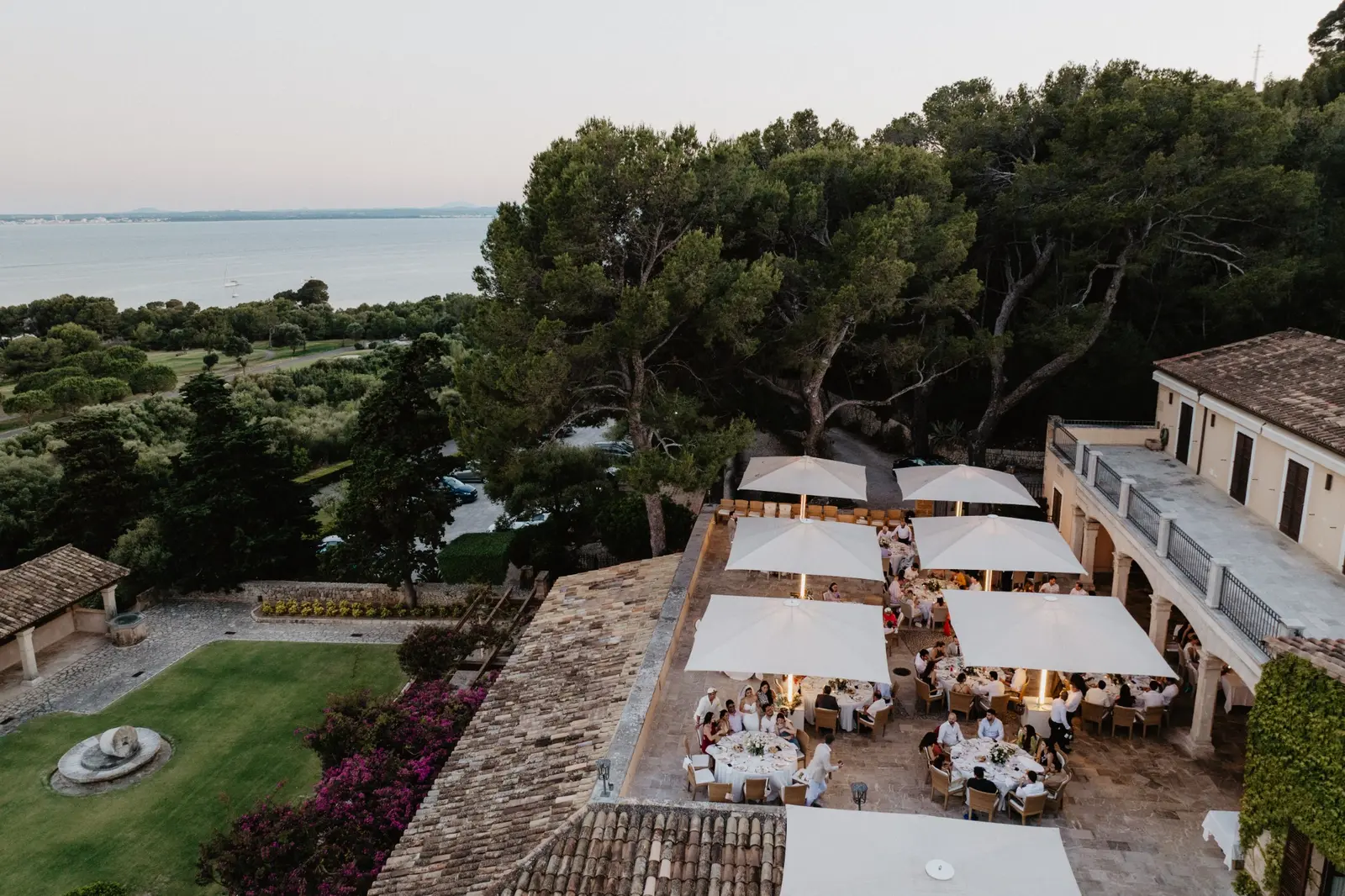
Guest count changes a Mallorca wedding budget through far more than catering. It affects drinks, furniture, staffing, transport, venue choice, timings, and contingency planning. Some costs rise with every person. Others remain fixed. Several increase only when your celebration crosses a practical threshold. The right number is therefore not simply the smallest list. It is the number your budget, venue, and guest experience can support comfortably.
This guide explains how those costs behave. It also shows why guest numbers should be tested before choosing a venue.
In this guide
- Why guest count affects more than dinner
- The three ways wedding costs change
- What happens when 70 guests become 85
- Why a smaller wedding is not proportionally cheaper
- How wedding weekends multiply variable costs
- How guest count shapes your venue direction
- How to create realistic planning scenarios
- Frequently asked questions
Why does guest count affect more than catering?
Every additional guest needs more than a chair and a meal. They also affect service, transport, space, timing, and the structure supporting the day.
The obvious increase appears in food and drink. However, the quieter changes often matter just as much.
More guests can mean additional tables, place settings, menus, ceremony seating, glassware, and floral pieces. They can require more waiting staff, bar staff, and transport capacity.
Guest numbers also affect movement. A ceremony entrance takes longer with 120 guests than with 40. Dinner service requires more coordination. Coach departures may need separate waves.
This matters particularly at a destination wedding in Mallorca. Guests are often travelling without cars and staying in unfamiliar areas. Transport cannot be treated as an afterthought.
For current price ranges across the main categories, read our Mallorca wedding cost guide.
The three ways Mallorca wedding costs change
A useful budget separates costs into fixed, variable, and threshold categories. This prevents every item from being treated as a simple cost per person.
| Cost type | How it behaves | Common examples |
|---|---|---|
| Fixed costs | Usually stay similar within the same wedding scope | Planning, photographer, celebrant, core DJ service, venue hire |
| Variable costs | Rise with each confirmed guest | Catering, drinks, stationery, place settings, guest gifts |
| Threshold costs | Increase when the group crosses a capacity point | Coaches, staff teams, bars, toilets, power, furniture, Plan B space |
The categories are not identical at every venue. A venue may include furniture, while another requires separate rentals. One caterer may include tableware, while another prices it separately.
This is why two weddings with equal guest numbers can have very different totals. The venue’s operating conditions change the calculation.
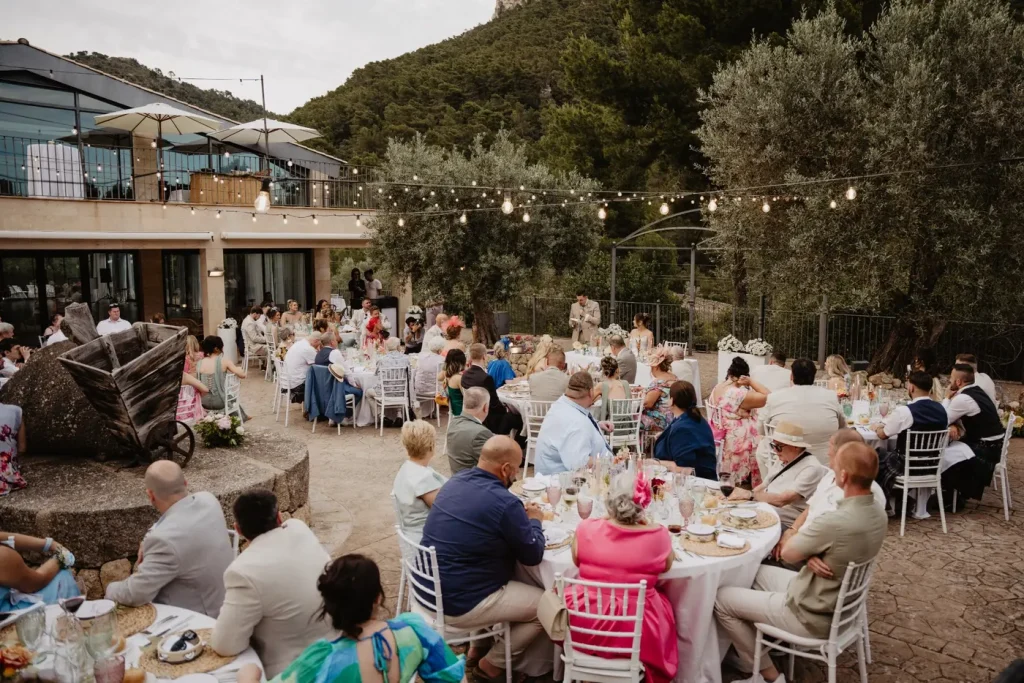
Fixed costs do not disappear at a smaller wedding
A photographer does not usually charge half because the guest list falls from 80 to 40. The same applies to many planning and entertainment services.
The venue may still require exclusive use. The ceremony still needs sound. The dinner still needs lighting and a working timeline.
This creates an important effect. Smaller weddings often have a higher overall cost per guest, despite having a lower total budget.
That does not make a smaller celebration poor value. It may create more privacy, time, and personal attention for every guest.
Variable costs rise with every confirmed person
Food and drink are the clearest examples. Each guest may also need rentals, stationery, transport, and several meals across the weekend.
The increase becomes more visible during a multi-day wedding. One additional guest might attend welcome drinks, the wedding, and a farewell brunch.
The question is therefore not only, “How much is dinner per person?”
The better question is, “Which parts of the celebration include every guest?”
Threshold costs create the biggest surprises
Threshold costs do not rise smoothly. They appear when your existing structure no longer supports the group.
A 50-seat coach cannot carry 58 guests. One bar may not serve 120 people comfortably. A rain room may hold dinner for 70, but not 90.
Crossing that threshold can add another vehicle, team, service point, or space. The increase may be larger than the cost of eight extra meals.
These thresholds are rarely visible in an attractive venue brochure. They need to be checked against the real guest list and wedding flow.
What happens when 70 wedding guests become 85?
An increase from 70 to 85 guests adds about 21 per cent to every genuinely per-person cost. It may also trigger threshold costs.
Suppose a selected catering package costs €230 per guest before applicable IVA. Fifteen additional guests would add €3,450 before any other changes.
That figure may still exclude additional drinks, table settings, furniture, transport, staffing, and stationery. It could also change the venue shortlist.
The practical effect reaches the whole event:
- fifteen more ceremony seats;
- more aperitif service and drinks;
- additional dinner tables and place settings;
- more space needed for the indoor Plan B;
- possible changes to coach capacity;
- longer guest movement and service timings;
- more pressure on toilets, bars, kitchens, and power.
This is why a changing guest list must trigger a budget review. The original estimate no longer describes the same wedding.
You can test different starting scenarios with our Mallorca wedding budget calculator.
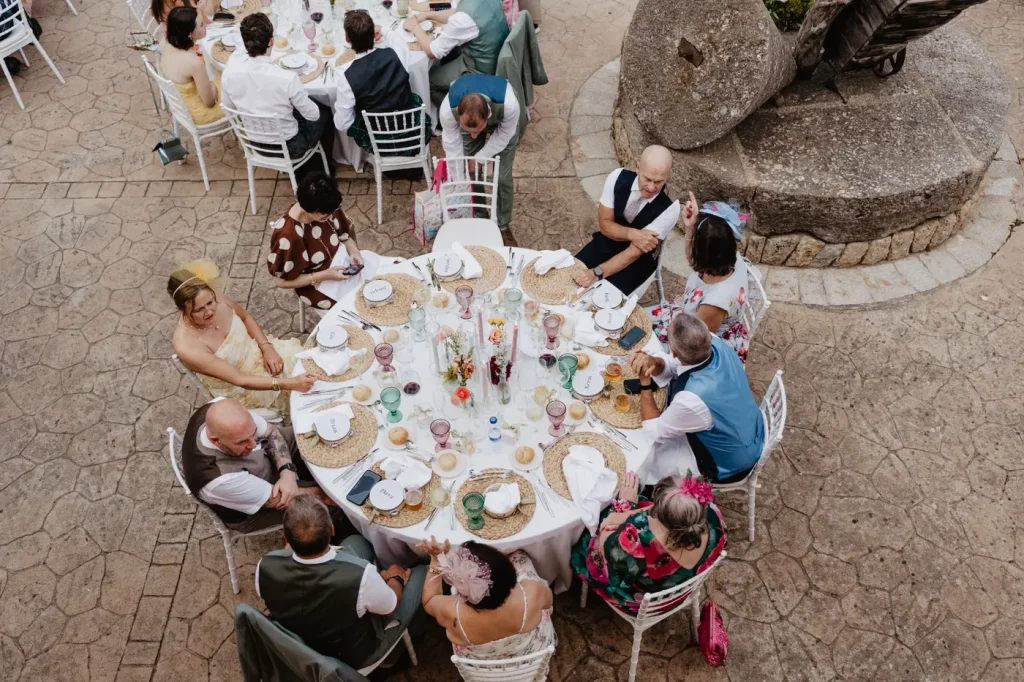
Why is a 40-person wedding not half the price of an 80-person wedding?
A 40-person wedding can cost less overall, but it is rarely exactly half the price. Many professional and venue costs remain fixed.
The saving usually comes from catering, drinks, rentals, stationery, and transport. The photographer, planner, music, and venue may change very little.
A smaller guest list can create a different kind of value. You may invest more in food, design, live music, or time together.
It can also open venues that would never support a larger group. A private villa or intimate finca may become realistic.
However, small does not automatically mean simple. Private properties may need furniture, catering infrastructure, lighting, power, toilets, or additional permissions.
The full venue cost matters more than the advertised hire fee.
How do wedding weekends multiply guest costs?
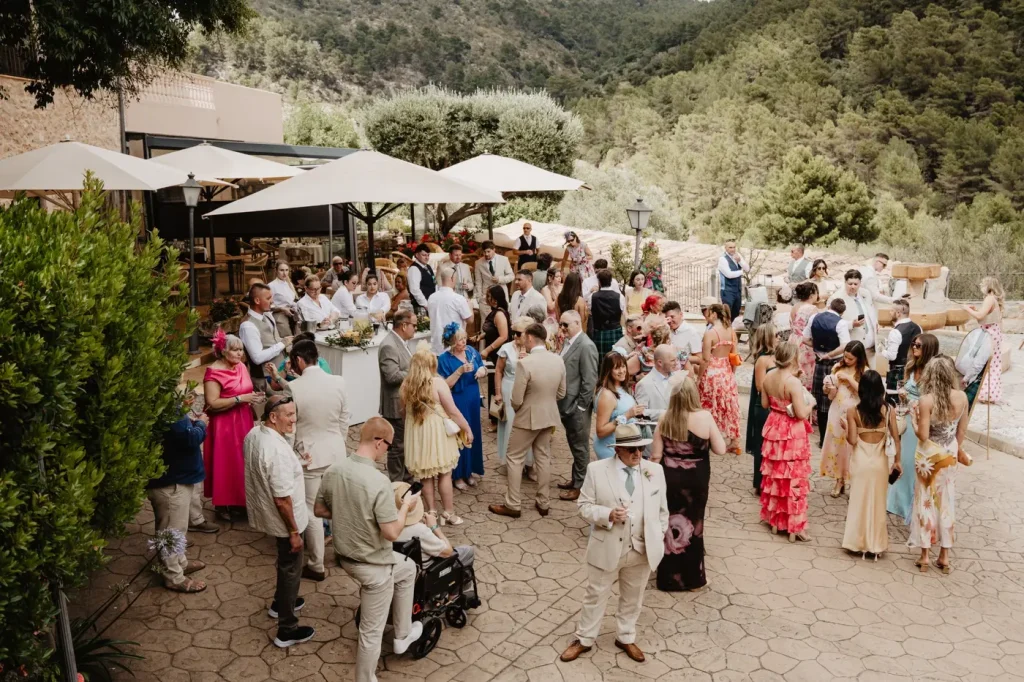
A wedding weekend can multiply variable costs because guests may attend several hosted events. Each event needs its own defined scope.
Welcome drinks can be a simple gathering or a fully produced evening. A farewell brunch can be casual or privately catered.
The number of days does not determine the experience alone. The service level across those days creates the budget.
When the budget is fixed, protect the wedding day first. It remains the emotional foundation of the celebration.
Additional events should support that day. They should not weaken its food, music, comfort, or photography.
A considered weekend might therefore include:
- a relaxed restaurant gathering before the wedding;
- a fully hosted wedding day;
- an informal beach, pool, or breakfast meeting afterwards.
Not every guest must attend every event. Smaller attendance on surrounding days can preserve connection without duplicating the full wedding budget.
How many guests can your Mallorca wedding budget support?
Your budget can support the guest number remaining after fixed costs, essential logistics, taxes, and contingency are protected.
Dividing the total budget by the guest count is useful, but incomplete. It shows pressure, not feasibility.
For example, two couples may both have €1,000 per guest. One needs a single celebration near Palma. The other wants three events at a remote finca.
Their cost structures will not be comparable.
Before deciding that a number works, define five things:
- Which events are included in the budget?
- Does the figure include planning and applicable IVA?
- Are accommodation and guest transport included?
- Which experiences are non-negotiable?
- Is the figure a target or an absolute ceiling?
Only then can cost per guest become a meaningful planning signal.
Your invited guest count is not your planning guest count
The invitation list shows who you would like to include. The planning number estimates who will realistically attend and require services.
Destination weddings often receive declines because travel requires time, flights, accommodation, and childcare. However, assumptions should remain conservative early on.
Do not build a venue plan around the hope that many guests will decline. Capacity and budget should tolerate a stronger response.
Create three working numbers instead:
| Scenario | Purpose |
|---|---|
| Maximum invited | Tests venue capacity and financial risk |
| Likely attendance | Guides the main working budget |
| Confirmed attendance | Controls final catering, transport, seating, and production |
These scenarios should be reviewed at key decision points. They are especially important before signing a venue or expanding the wedding weekend.
How guest count shapes your Mallorca venue direction
Guest count changes which venues work legally, practically, and emotionally. Capacity alone is never enough.
A property may advertise space for 120 people. That does not confirm comfortable dinner space, an indoor alternative, or safe coach access.
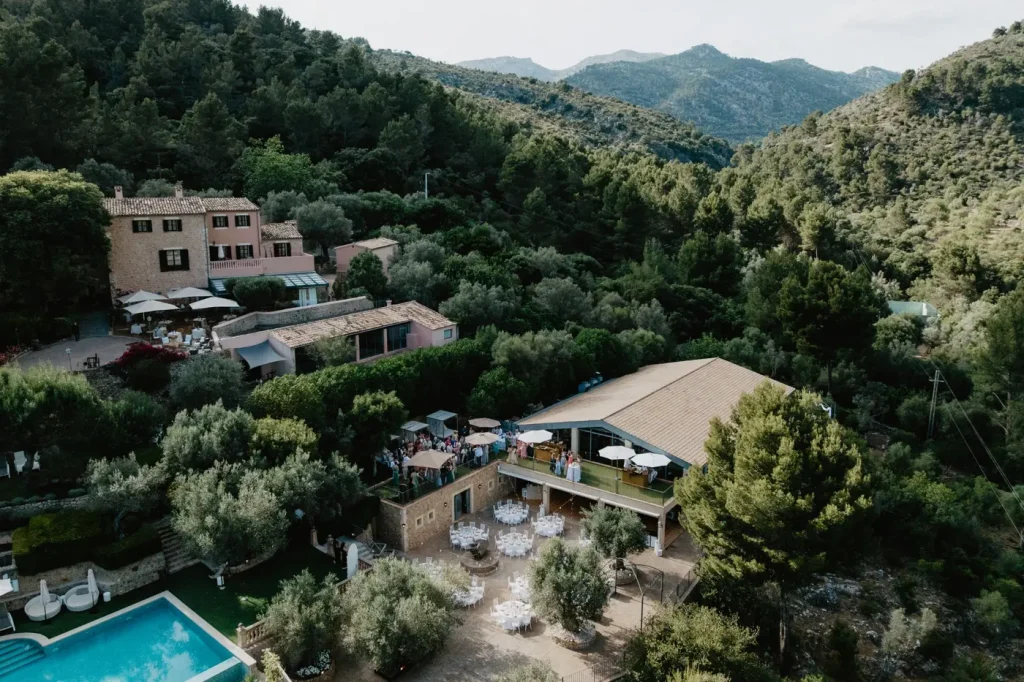
The venue must work as part of a connected system:
- guest accommodation;
- transport routes and vehicle access;
- ceremony and dinner capacity;
- indoor Plan B capacity;
- kitchen and catering access;
- sound restrictions and party space;
- toilets, power, and technical production;
- the desired atmosphere and level of privacy.
A larger guest list may require a venue with stronger existing infrastructure. A smaller group may support a more private, residential setting.
Neither direction is better. Each creates a different wedding experience and a different budget structure.
How to reduce guest numbers without reducing the meaning
A smaller guest list should protect closeness, not simply cut costs. Start with relationships, then assess the financial effect.
Ask which people belong to the emotional centre of the celebration. Avoid beginning with venue capacity or arbitrary percentages.
You can also rethink attendance across several events. The closest circle might attend an intimate welcome dinner. The full group can join the wedding day.
Another option is keeping the main wedding broad while simplifying surrounding events. This often protects both inclusion and budget.
Be careful with automatic plus-ones and extended family categories. Consistency matters, but every invitation changes the working structure.
The goal is not a smaller number at any cost. It is a guest list you can host with confidence and genuine care.
The Dybiec Wedding perspective: model the wedding before booking it
At Dybiec Wedding, guest count is tested before venue options become commitments. The number must work with the complete celebration.
Magdalena begins with the couple’s priorities, expected attendance, location needs, and overall budget. She then examines how those choices affect each other.
This approach avoids a common planning mistake. A couple books a beautiful finca, then discovers the surrounding structure is too expensive.
The venue may require additional transport, furniture, sound, lighting, staffing, or a separate weather solution. Those costs can change the original direction.
Planning from abroad makes that assessment harder. Maps, photographs, and proposals rarely show how a venue operates with your exact number.
Magdalena provides local guidance before those assumptions become contracts. She helps couples compare realistic options, rather than simply attractive ones.
Past couples often describe the value through calm, trust, and reliable communication. You can read their Dybiec Wedding reviews before choosing your own planning direction.
Planning your guest number from the UK or USA
International couples need a guest number that reflects travel behaviour and local logistics. The starting concerns differ slightly by market.
UK couples often have easier flight access. Attendance can therefore remain higher than expected, especially during school holidays.
US couples usually face longer journeys and higher travel commitments. They may invite widely, but need clearer attendance checkpoints.
Both groups should communicate early. Guests need likely dates, location guidance, accommodation areas, and expected event days.
Clear information improves responses. It also reduces late changes caused by uncertainty about travel.
Your planner should distinguish invited, likely, and confirmed attendance throughout the process. Each number serves a different decision.
A practical guest count process
A reliable process creates budget clarity before you commit to the wrong structure.
- Write the full invitation list without choosing a venue.
- Separate essential guests from wider social invitations.
- Estimate likely attendance conservatively.
- Define which guests attend each hosted event.
- Build budget scenarios for the likely and maximum numbers.
- Test venue, Plan B, transport, and accommodation capacity.
- Review the numbers before signing major contracts.
- Update suppliers after confirmed responses arrive.
This process protects the experience. It also gives every later proposal a clear and consistent basis.
Frequently asked questions
Does every extra wedding guest add the same amount?
No. Variable costs rise per person, but threshold costs appear only when capacity is exceeded. Another coach or staff team can create a larger increase.
Is a small Mallorca wedding always cheaper per guest?
Not usually. The total can be lower, but many fixed costs remain. Smaller weddings often invest more in each guest’s experience.
Should we choose a venue before confirming our guest list?
Create a realistic range first. The venue must support your maximum risk, likely attendance, indoor Plan B, and transport needs.
How should we budget when guests have not replied?
Use maximum and likely scenarios. Do not rely on expected declines to make an otherwise unsuitable venue or budget appear workable.
Does guest count matter more for a multi-day wedding?
Yes. Additional guests may attend several meals and events. This increases catering, drinks, staffing, transport, and communication requirements.
Is cost per guest a reliable way to compare weddings?
It is a useful pressure indicator, but not a complete answer. Venue infrastructure, event count, logistics, and service level still matter.
Can a planner help us decide how many people to invite?
A planner should not choose your relationships. They can show how each scenario changes venue options, logistics, and the complete budget.
Begin with the number that supports the experience
Your guest list is not only a line in a spreadsheet. It shapes the atmosphere, hospitality, movement, and investment behind the celebration.
The right number should let you care for your guests without weakening the moments that matter most.
Before committing to a venue, explore the Dybiec Wedding planning offer. Begin with a realistic direction for your guests, budget, and wedding day.
