

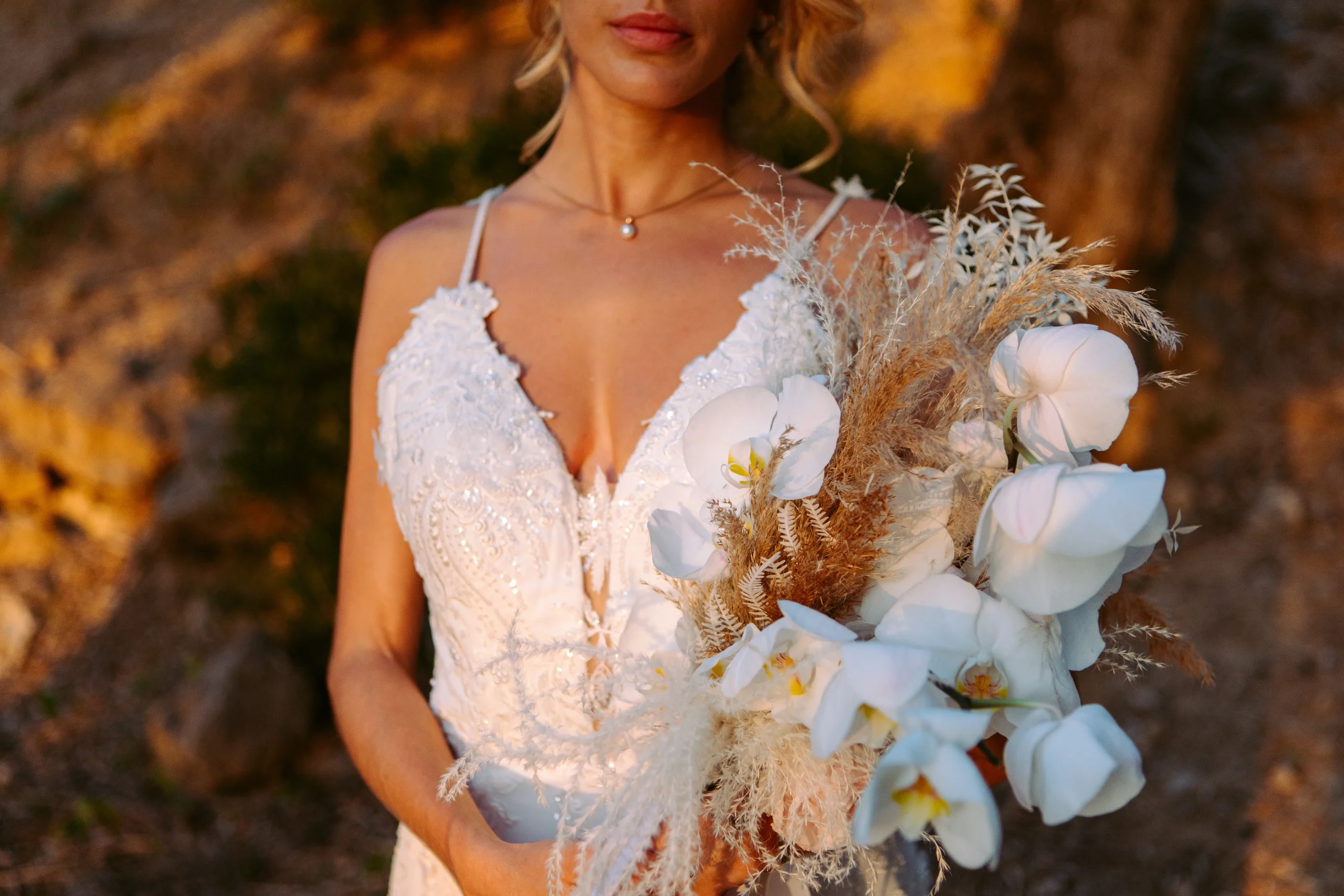
Planning a destination wedding in Mallorca starts with a feeling of extraordinary possibility. Then, usually within a few weeks, it becomes something else entirely. Soon, the decisions multiply. The supplier list grows. The budget shifts. The overwhelm arrives quietly — and then all at once. However, this is not a reflection of poor organisation. It is a structural reality of planning a complex international event from abroad, in a country with its own regulations, language, venues and logistics. Understanding why couples feel overwhelmed planning a wedding in Mallorca is the first step to changing it.
Table of Contents
- Why couples feel overwhelmed planning a wedding in Mallorca earlier than expected
- The hidden complexity of Mallorca as a destination
- Why unlimited venue choice is part of the problem
- Transport and guest logistics: the invisible architecture
- Budget uncertainty: the real source of stress
- Sound regulations and venue restrictions in Mallorca
- What changes when structure replaces pressure
- How Magdalena approaches the planning process differently
- A note on extending your celebration
- FAQ
1. Why Couples Feel Overwhelmed Planning a Wedding in Mallorca Earlier Than Expected
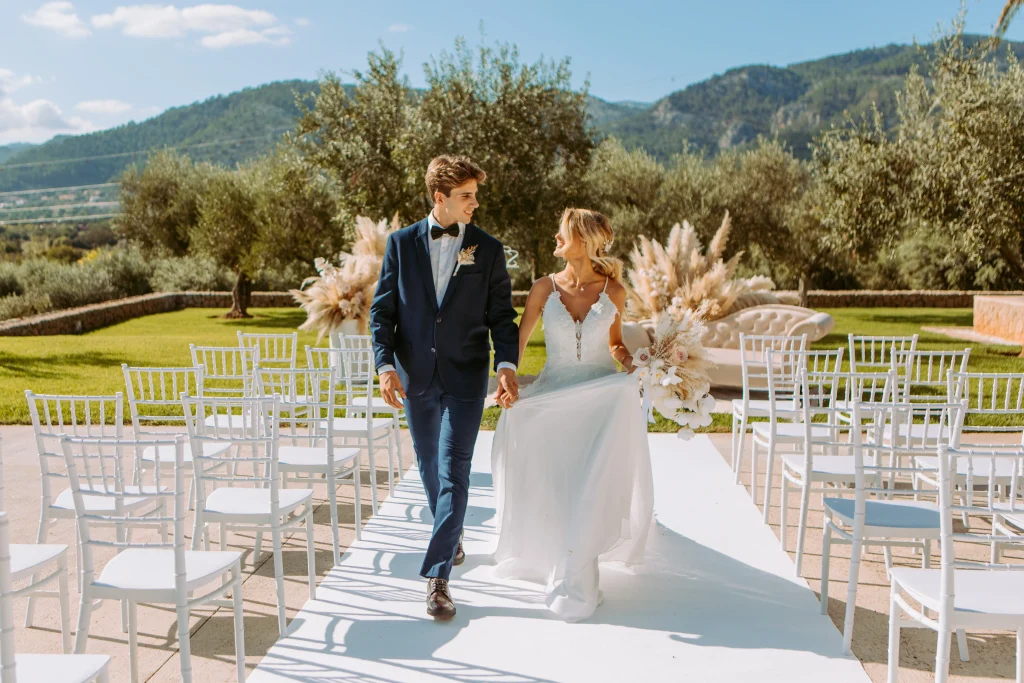
Most couples begin their Mallorca wedding journey in a state of genuine excitement. After all, the island is compelling. The photographs are beautiful. The idea of bringing the people they love to a place like this feels right.
The overwhelm does not begin with a single difficult decision. It begins with the realisation that every decision is connected to every other decision — and that none of them can be made in isolation.
Venue determines guest flow. Guest count determines accommodation strategy. Accommodation determines transport. Transport determines timing. Timing determines the entire rhythm of the day.
When couples try to manage all of this simultaneously — while living abroad, coordinating across time zones, working full-time and managing normal life — the cognitive load becomes genuinely unsustainable.
When couples feel overwhelmed planning a wedding in Mallorca, this is not a personal failure. It is a design problem.
Yet design problems have design solutions.
2. The Hidden Complexity of Mallorca as a Destination
Mallorca looks effortless in photographs. But the island has its own operational complexity that surprises most couples who begin planning without local guidance.
There are municipality regulations that vary by area. Venue permits require early application. Rural and coastal zones have sound restrictions that affect how long celebrations can continue and at what volume. Narrow mountain roads and remote finca access bring their own transport challenges. And there are legal considerations around symbolic versus civil ceremonies for non-Spanish residents.
None of these complexities make Mallorca a difficult place to marry. Thousands of couples choose it every year for very good reasons: the light, the landscape, the cuisine, the accommodation, the international flight connections, the quiet luxury of the island’s character.
But they do make local knowledge non-negotiable.
A couple planning from London, New York or Sydney cannot be expected to understand the intricacies of Mallorcan municipality permits, the logistics of rural venue access, or the specific sound regulations of a finca in Pollença — simply because that knowledge takes years to accumulate on the ground.
This is precisely why the most composed couples at their Mallorca weddings are rarely the ones who planned it entirely themselves.
3. Why Unlimited Venue Choice Is Part of the Problem
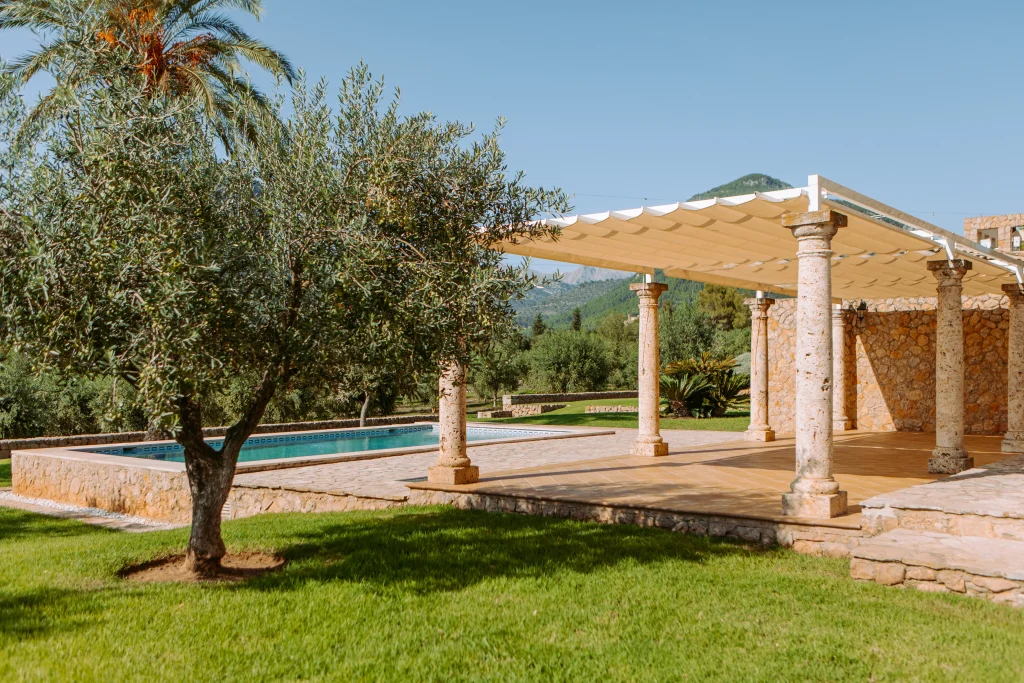
One of the most counterintuitive truths about destination wedding planning in Mallorca is that the breadth of choice available to couples is itself a significant source of overwhelm.
After all, the island offers everything.
Rustic fincas surrounded by olive groves and ancient stone walls. Boutique hotels perched above the Mediterranean. Luxury private estates hidden in the Tramuntana mountains. Clifftop terraces with panoramic sea views. Contemporary villas with private pools. Historic manor houses in the island’s interior.
Furthermore, each of these creates an entirely different guest experience, atmosphere and operational structure. And each comes with different investment levels, restrictions, capacity limits and logistical requirements.
The challenge is not finding beautiful venues — it is knowing which venue is genuinely right for your guest profile, budget, format and vision before you begin researching.
At Dybiec Wedding, Magdalena’s approach begins not with venues, but with clarity. What experience do your guests need to have? How many people are travelling internationally? What level of accommodation exclusivity matters to you? What is the emotional atmosphere you want to create?
Only once those foundations are established does the venue search begin — and at that point, it becomes far more targeted, faster and far less overwhelming.
4. Transport and Guest Logistics: The Invisible Architecture
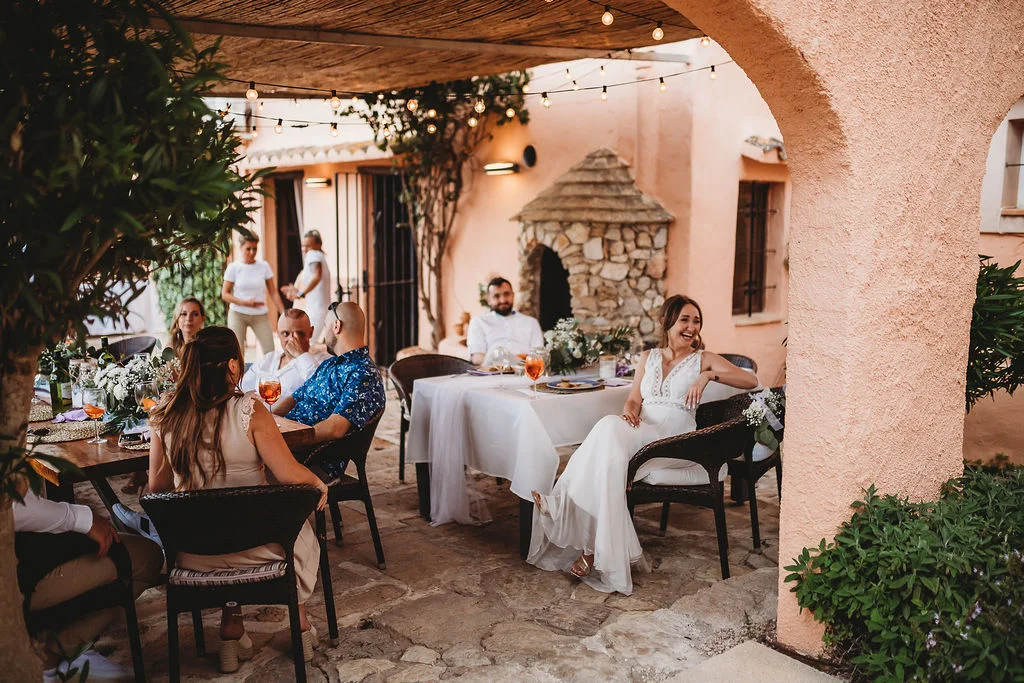
Island roads, rural access and guest shuttles add a layer of complexity that catches many couples off guard. In Mallorca, in fact, transport is rarely a simple logistical footnote. For many celebrations, it is one of the most operationally demanding elements of the entire event.
First, guests arrive on different flights from different cities and countries. Moreover, many venues sit in areas with narrow access roads, no public transport and limited parking. The geography of the island — beautiful as it is — means that a wedding in the Serra de Tramuntana and a wedding in the southeast involve completely different transport architectures.
The invisible structure that makes a Mallorca wedding feel effortless typically includes:
- Multiple guest pickup plans based on arrival times
- Pre-arranged shuttle routes from accommodation to venue
- Timed transfers coordinated with the ceremony and dinner schedule
- Night return transport for guests staying across different areas
- Backup route planning for remote venue access
- A clear communication system so guests always know where to be and when
When this infrastructure exists, guests experience something remarkable: they feel looked after without ever being aware of the logistics. They arrive, they are welcomed, they move through the day naturally. There is no confusion, no waiting, no uncertainty.
Of course, that sense of ease is not an accident. It is the result of careful invisible planning — and it is one of the most significant luxuries Magdalena builds into every celebration she personally guides.
5. Budget Uncertainty: The Real Source of Stress
When planning a wedding in Mallorca, couples rarely feel overwhelmed by the budget itself. They feel overwhelmed by not knowing whether their budget is enough — and not understanding what drives costs in ways they cannot see.
The hidden architecture of a Mallorca destination wedding budget typically includes elements that couples do not encounter when planning local celebrations:
- Spanish VAT structures applied to venue and supplier contracts
- Municipality permit costs that vary by venue location
- Supplier overtime fees for celebrations extending beyond standard hours
- Technical requirements for sound systems and lighting in different venue types
- Transport costs that scale significantly with guest numbers and island geography
- Legalisation and documentation fees for non-resident civil ceremonies
As a general guideline, destination weddings in Mallorca often begin around €30,000 for smaller celebrations, while larger or luxury weddings can reach €60,000 or considerably more. But the total investment is far less important than understanding its structure clearly from the beginning.
At Dybiec Wedding, Magdalena treats budget planning as a strategic framework rather than a spreadsheet. A contingency reserve of 10–15% is built into every financial plan from the outset — not as an afterthought, but as a fundamental component of calm decision-making throughout the process.
Because luxury, at its most refined, is not about spending without limits. It is knowing that everything has been anticipated before the wedding day arrives.
6. Sound Regulations and Venue Restrictions in Mallorca
Many couples imagine their wedding celebrations continuing well into the early hours under the stars. What they discover, sometimes far too late in the planning process, is that Mallorca operates under municipality sound regulations that can significantly shape the structure of a celebration.
Moreover, these regulations vary considerably across the island. Rural fincas, coastal venues and properties near residential areas often have specific cut-off times and volume restrictions that differ from one municipality to the next. Extending celebrations beyond these limits requires specialist sound systems, technical coordination and municipality compliance — none of which can be arranged at short notice.
Understanding venue-specific restrictions early in the planning process is not a limitation. Instead, it is a planning advantage. As a result, the celebration structure can take shape around those parameters, rather than bending under pressure.
This is local knowledge in its most practical form — and it is one of the reasons working with a planner who has established relationships with specific venues across the island changes the quality of every decision made.
7. What Changes When Structure Replaces Pressure

The most elegant weddings in Mallorca share a quality that has nothing to do with flowers, furniture or the number of guests in attendance.
Above all, they feel calm.
Not because nothing happened behind the scenes. But because everything that happened behind the scenes was designed to be invisible.
Guests move naturally from one moment to the next. The light shifts. Dinner arrives. Then the music changes, and the atmosphere evolves. And through all of it, the couple is present — not managing, not worrying, not solving problems — simply there, inside the experience they spent months creating.
Indeed, this level of refinement is never accidental. It is built through careful curation, operational precision and the kind of deep local knowledge of Mallorca that only comes from planning weddings on the island across many seasons.
The most seamlessly planned Mallorca weddings are not those where couples tried to control every detail themselves. They are the ones where couples made confident decisions, without stress or pressure, guided by someone who understood the terrain completely.
That shift — from pressure to structure, from overwhelm to presence — is the central transformation Magdalena creates for every couple she works with.
8. How Magdalena Approaches the Planning Process Differently
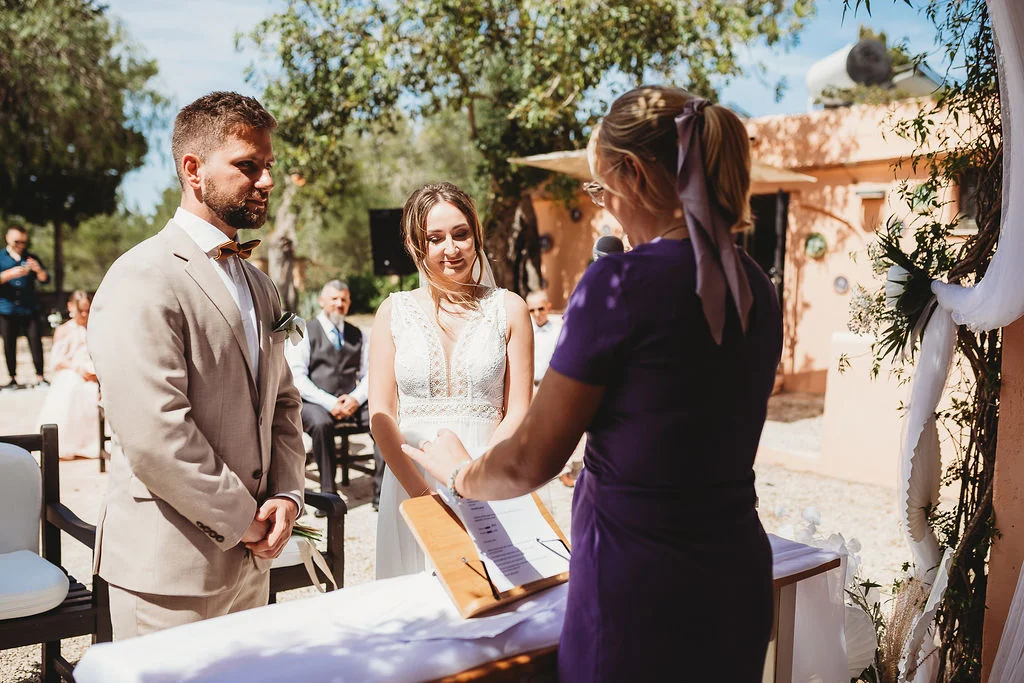
Magdalena is not simply a coordinator who manages suppliers and timelines. As wedding planner, celebrant and personal guide in Mallorca, her role is to carry the operational responsibility of the entire planning process — so that couples never have to.
From the first private conversation, her focus is on understanding the couple’s story: who they are, who their guests are, what kind of atmosphere they want to create and what experience they want the people they love to have.
From that foundation, every subsequent decision — venue, suppliers, timeline, design, ceremony, guest logistics — is made with clarity and intention rather than pressure.
She works with a carefully selected circle of Mallorca partners: photographers, florists, caterers, musicians and technical teams who share the same commitment to precision and quality. Couples do not arrive at their wedding day meeting suppliers for the first time. They arrive in a world that Magdalena has already curated, prepared and calibrated to their story.
In other words, this is the nature of boutique luxury in practice. Not scale. Not volume. But depth, attention and personal presence throughout.
If you are in the early stages of thinking about a destination wedding in Mallorca and would like to begin with a private conversation, you can explore the Dybiec Wedding approach here or download The Mallorca Wedding Guide as a first step into the planning process.
9. A Note on Extending Your Celebration
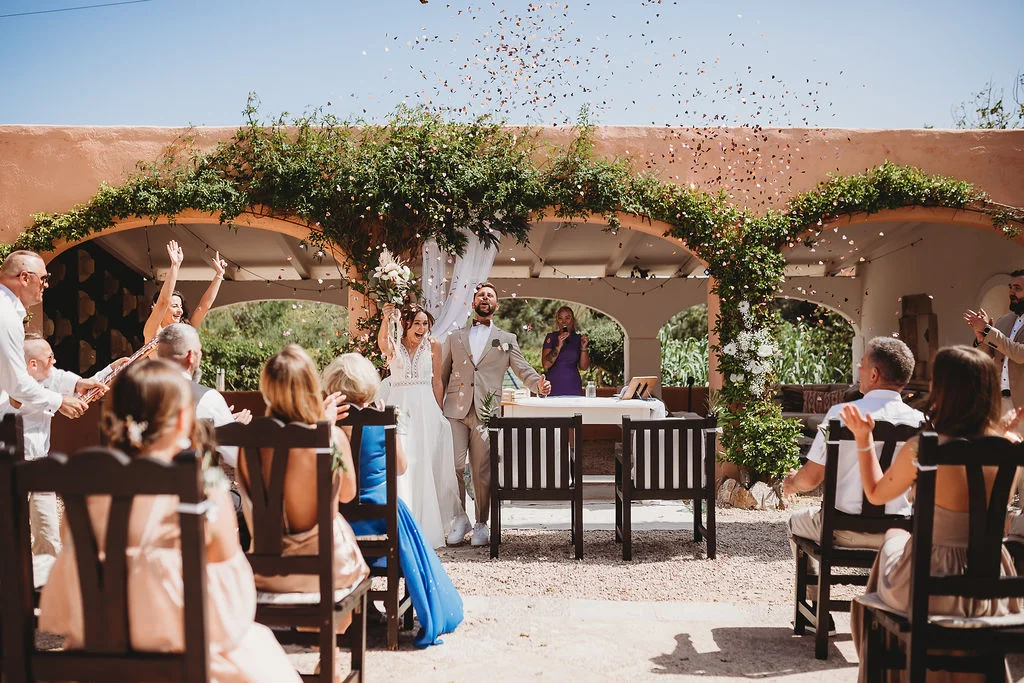
Some couples, once they understand the depth of what is possible in Mallorca, choose to extend their wedding into a multi-day experience.
Rather than compressing everything — the welcome, the celebration, the time with guests, the atmosphere of the island — into a single evening, they create a structure that breathes.
A welcome gathering on the evening before. The wedding day itself, complete and unhurried. A farewell gathering the morning or afternoon after, when the intensity of the day has softened into something quieter and more intimate.
However, this is not a larger wedding. It is an expanded guest experience — designed for couples who want more time with the people they love, and who want those people to experience Mallorca properly, not merely pass through it.
Still, it is one format among several. The wedding day itself — designed with intention, guided personally by Magdalena and shaped entirely around your story — is always the foundation. Everything else is an extension of it.
You can read more about the Mallorca Wedding Guide to understand the full range of what is possible on the island.
FAQ
Why do couples feel overwhelmed planning a destination wedding in Mallorca?
The overwhelm comes primarily from the interconnected nature of decisions — venue, guest count, accommodation, transport and budget all affect each other — combined with the complexity of planning internationally from abroad. Without local knowledge and a clear structure for decision-making, the planning process quickly becomes unsustainable.
How far in advance should you begin planning a Mallorca wedding?
For premium venues during the island’s high season (mid-May to mid-October), beginning 14–18 months in advance is advisable. This allows enough time to secure the right venue and curated supplier team without pressure.
What are the main hidden costs in a Mallorca destination wedding budget?
The most common budget surprises include Spanish VAT on venue and supplier contracts, municipality permits, transport costs across the island, technical requirements for sound and lighting, and overtime fees for extended celebrations. Building a 10–15% contingency into the budget from the beginning significantly reduces financial stress.
Do Mallorca venues have sound restrictions?
Yes. Many venues — particularly rural fincas and properties in coastal municipalities — operate under specific sound regulations and cut-off times. These vary considerably by location and require early investigation to ensure the celebration structure is designed accordingly.
What is the difference between a symbolic and a civil ceremony in Mallorca for international couples?
Civil ceremonies for non-Spanish residents involve specific legal documentation requirements and can be complex to navigate. Many international couples choose symbolic ceremonies, which carry personal meaning while avoiding administrative complexity. Magdalena guides couples through both options as part of the planning process.
What does it mean to have a wedding planner who is also a celebrant?
When your planner and celebrant are the same person, there is a continuity of understanding between the logistics of the day and the emotional heart of the ceremony. Magdalena holds both — which means the ceremony is not designed in isolation, but as an integral part of the entire experience she has curated.
How can couples avoid feeling overwhelmed planning a wedding in Mallorca?
The most effective way is to work with someone who carries the operational responsibility on your behalf from the beginning of the process. Not a checklist. Not a coordination service. A personally guided relationship where every decision is made in sequence, with full local knowledge and no pressure.
Begin your Mallorca wedding story with a private conversation with Magdalena — contact Dybiec Wedding here.

