
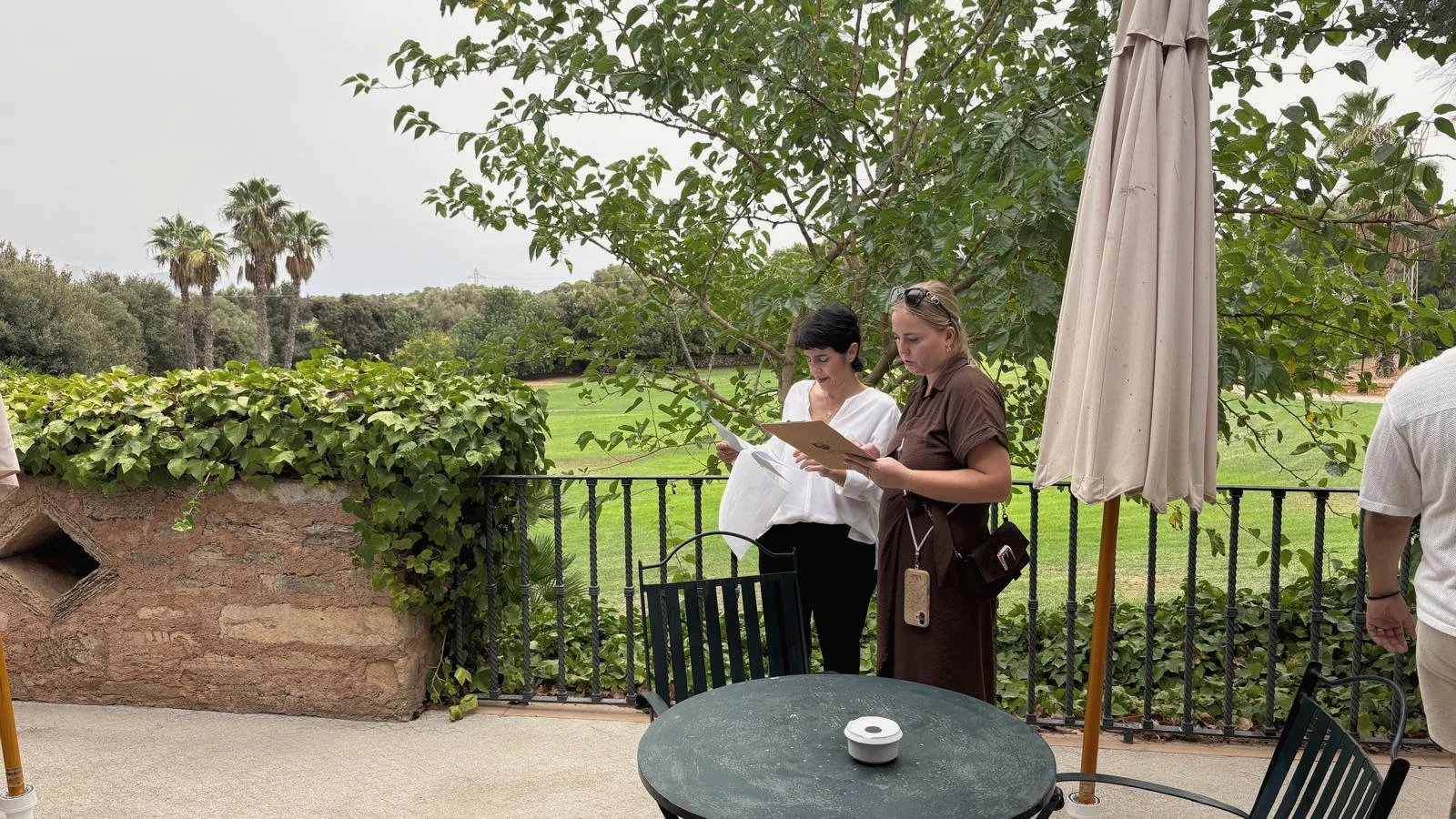
A wedding planner in Mallorca manages the decisions, people and logistics that are difficult to control from abroad. That includes budget planning, venue and supplier coordination, guest logistics, timelines and contingency planning. A good planner also carries the mental load behind hundreds of smaller decisions. The real value is not simply that everything gets organised. It is that you can arrive at your wedding knowing someone local is already holding the details.
In this guide
· What a wedding planner actually handles
· Why budget clarity comes before bookings
· Why local planning matters when you live abroad
· What should happen before and after you sign
· The mental load a planner takes off you
· What changes on the wedding day
· How a planner handles problems
· How to choose the right planner
· The Dybiec Wedding perspective
· Frequently asked questions
What does a wedding planner in Mallorca actually handle?
A wedding planner connects the parts of your wedding that would otherwise be managed separately. The role goes far beyond booking a venue and recommending suppliers.
In practice, full planning can include:
· building and tracking a realistic budget;
· helping you choose a venue that works logistically, not only visually;
· sourcing and coordinating trusted suppliers;
· reviewing timings, access, sound limits and production needs;
· organising guest transport and other practical logistics;
· creating one shared wedding timeline;
· coordinating the wedding day itself;
· preparing alternatives before a problem becomes urgent.
The visible part is flowers, music, dinner and the ceremony. The larger part is the system holding those elements together.
Most couples researching this question are asking something more personal. Will this person genuinely take responsibility, or will we still manage everything ourselves?
That is the question worth answering before you sign.
Why budget clarity should come before bookings
A Mallorca wedding budget is not one headline number. It is a set of connected costs, and early decisions affect everything that follows.
A band may also require production, sound equipment and transport. A venue fee may sit beside staffing, overtime and technical restrictions.
These costs are difficult to judge from another country. A planner should connect guest count, venue, catering, music, decoration and transport from the start.
That gives you a budget you can make decisions with. It does not promise that every figure will stay fixed.
It shows what each choice changes before you are committed to it.
If you are still building your starting figure, use the Mallorca wedding cost calculator before approaching individual suppliers.
Why hire a wedding planner in Mallorca when planning from abroad?
Local representation matters because many important wedding decisions cannot be checked properly through photographs, emails or venue brochures.
A planner on the island can assess practical details before they become expensive decisions. These include access, supplier restrictions, transport, timing and guest comfort.
Planning a Mallorca wedding from the UK
For British couples, legal formalities should be checked early. The rules depend on the type of ceremony and your personal circumstances.
GOV.UK guidance for getting married in Spain advises couples to check Spanish law and the requirements of the local civil registry. Eligibility and required documents can vary.
That legal question should be separated from the creative planning. Once the ceremony route is clear, the venue and wedding-day decisions become easier to structure.
Planning a Mallorca wedding from the US
For US couples, distance is often the bigger concern. You are making high-value decisions from several time zones away.
A local planner becomes your point of responsibility on the island. They can follow up with suppliers while you are offline and check details in person.
The Mallorca Wedding Guide explains the early decisions international couples often underestimate before choosing a venue.
What should happen before and after you sign with a planner?
A good planning process should create more clarity at every stage. You should not have to restart the conversation each time you meet.
Before the first planning call
Your planner should already understand the information you have shared. That includes guest numbers, timing, priorities and your initial budget direction.
They should also notice where your expectations may conflict. That preparation makes the call useful rather than administrative.
A good conversation should end with clearer priorities and a defined next step.
One useful question is simple: what happens between our calls?
The answer reveals whether someone is only coordinating meetings or actively guiding the process.
After you sign
Signing should begin the working relationship, not end the attention you received during the enquiry stage.
You should know who is responsible for your wedding. You should also know how decisions, supplier updates and budget changes will be communicated.
The months after signing are when the wedding is actually built. This is where consistency matters most.
The mental load a wedding planner takes off you
A destination wedding contains hundreds of small decisions. None looks difficult on its own, but together they create the real weight of planning.
Who needs a child seat? Which guests need airport transfers? Who has a dietary requirement? Where are the rings?
A planner takes those details out of your head. They record them, connect them and make sure each one appears at the right moment.
That work is rarely photographed. Yet it is one of the main reasons a well-planned wedding feels calm.
On your wedding day, you should not be the project manager. You should be getting married.
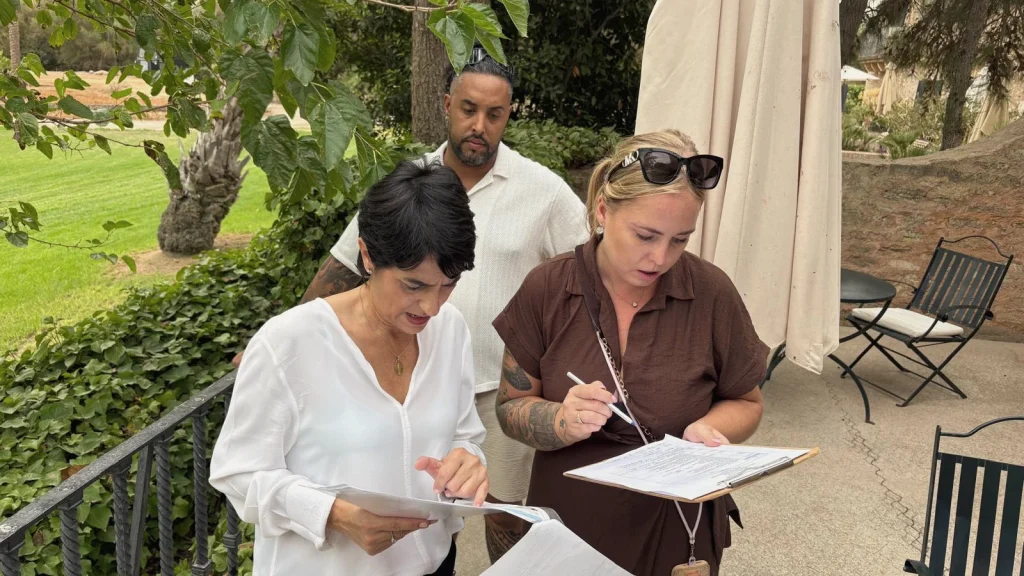
What changes on the wedding day itself?
The wedding day is where months of preparation become invisible support. Guests should experience the celebration, not the machinery behind it.
A supplier may arrive through a service entrance. Dinner may move ten minutes because photographs took longer than expected.
The music, catering, venue and florals may all need small adjustments during the day. Those decisions should happen without reaching you.
This is not about pretending that nothing ever changes. It is about making sure changes belong to the planning team.
The result is simple. You and your families can stay present instead of managing the timeline.
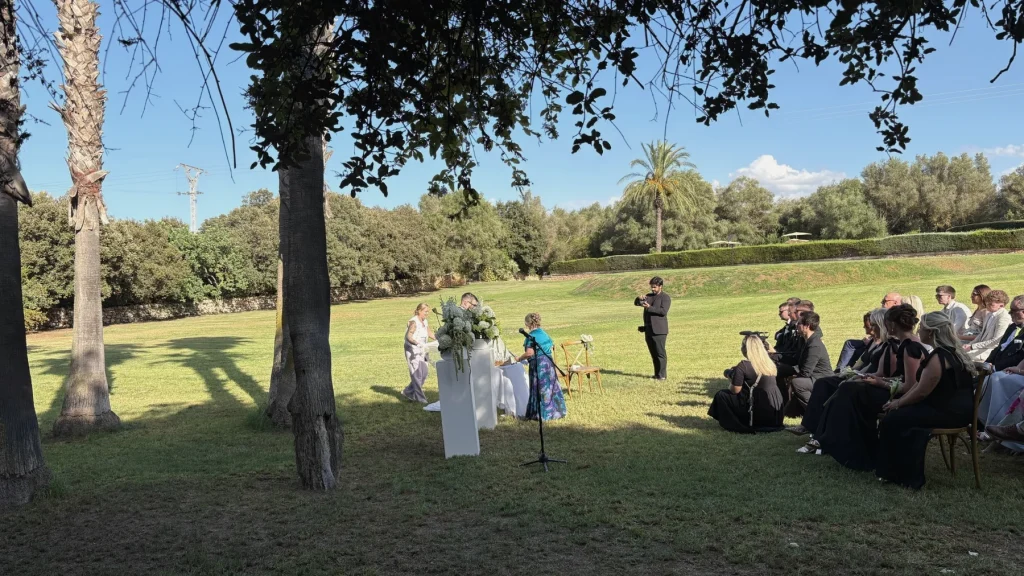
How does a good planner handle problems?
A planner should not promise that nothing will go wrong. They should show that alternatives have been considered before they are needed.
Weather changes. A supplier can become unavailable. A venue may adjust a condition or timing.
A genuine plan B is not a sentence in a proposal. It is a realistic alternative supported by local relationships and clear responsibility.
When something changes, you should not be the person negotiating the solution. The problem should be absorbed by the team around you.
How to choose the right wedding planner in Mallorca
The best questions are not only about services. They reveal how the planner works once the contract is signed and pressure increases.
| What to check | A reassuring answer | A warning sign |
| Budget honesty | Costs are mapped early, including what is not yet included | Only a headline figure, with detail promised later |
| Communication | One clear point of contact and defined updates | You need to chase for basic information |
| Supplier coordination | Suppliers work from one shared plan | You become the messenger between suppliers |
| Handling problems | Alternatives are discussed before they are needed | Contingency appears only when something fails |
| Local presence | Someone is genuinely working on the ground in Mallorca | The wedding is managed mainly from another country |
A planner confident in their process should welcome these questions. They should be able to answer with specifics, not reassurance alone.
Past couples often reveal what a website cannot. Read our Mallorca wedding planner reviews to see how the planning process felt before the wedding day.
The Dybiec Wedding perspective: one connected team
At Dybiec Wedding, planning is treated as one connected system. Ceremony, flowers, music and logistics should not develop in separate directions.
The family-led structure supports that approach operationally. Magdalena leads planning and ceremony. Urszula leads flowers and decoration. Jimy leads music.
Krzysztof supports the technical and logistical side. Each person works from the same priorities, timings and guest profile.
The benefit is not simply that the team is family-led. The benefit is fewer handovers and less fragmented communication.
You should not need to repeat the same story to several people. You should not become the link between suppliers who only know their own part.
Why Magdalena being both planner and celebrant matters
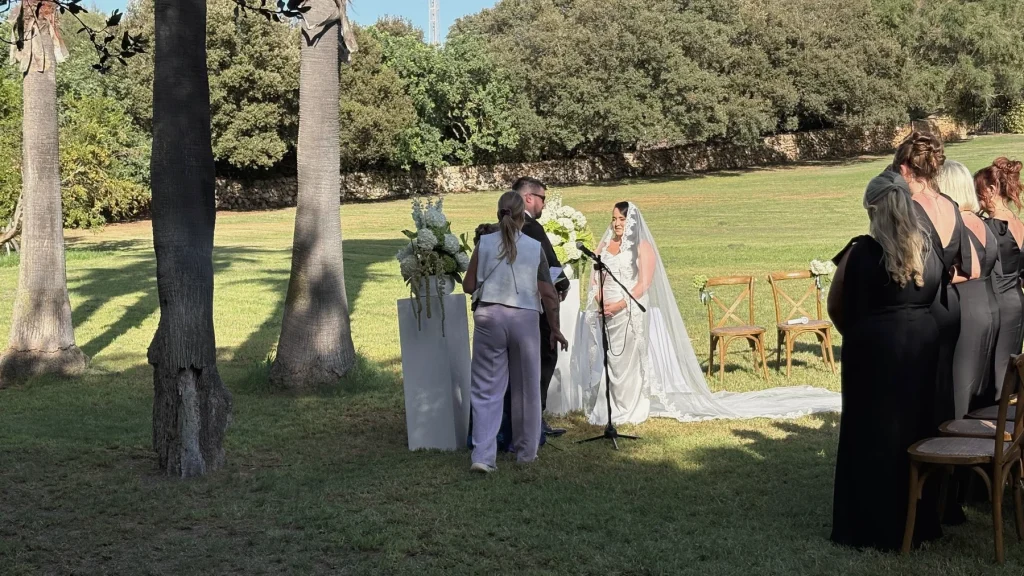
Magdalena is a wedding planner, celebrant and personal guide in Mallorca. Those roles can create useful continuity for a symbolic ceremony.
She learns your story during the planning process. That understanding can then carry directly into the ceremony she leads.
The emotional centre of the day does not need a separate briefing at the end. It can grow from the same relationship as the planning itself.
This matters particularly for international, multilingual and intimate weddings. It also matters when you want the ceremony to feel personal rather than generic.
Frequently asked questions
What does a wedding planner in Mallorca actually do?
A Mallorca wedding planner manages budget, suppliers, logistics, timelines and wedding-day coordination. They also prepare for problems before those problems reach you.
Do I need a wedding planner for a destination wedding in Mallorca?
No law requires you to hire one. However, local planning can reduce uncertainty around suppliers, venue restrictions, transport and wedding-day coordination.
How much does a wedding planner cost in Mallorca?
Planner fees vary by scope and complexity. Always separate the planner’s fee from the total wedding budget when comparing proposals.
What happens after I sign with a wedding planner?
You should receive a clear planning process, regular communication and one person responsible for the overall direction. Signing should increase clarity, not reduce contact.
How do I know if a Mallorca wedding planner is trustworthy?
Ask how budgets are tracked, how suppliers communicate and what happens when plans change. Specific answers are more useful than broad promises.
What happens if something goes wrong on the wedding day?
A prepared planner should manage the issue with suppliers and activate a realistic alternative. You should not be responsible for solving it yourself.
Before you choose
The question behind “what does a wedding planner in Mallorca do?” is usually about trust. Can you hand over the details and know they will still be held carefully months later?
That is what you should test in the first conversations. Look for clarity, local knowledge, consistent responsibility and calm answers to difficult questions.
Meet Magdalena, the person who would personally guide your Mallorca wedding. See how she works, before you decide.
